Ever walked across your yard and caught a whiff of something off? Or noticed your drains bubbling for no clear reason?
That’s your parts of a septic system waving a red flag, and if you don’t know how it works, you’re flying blind.
Most people don’t think about their septic system until there’s a backup, a soggy lawn, or an expensive repair bill. But here’s the truth: even a basic understanding of what’s underground can save you thousands in the long run.
In this guide, we’ll break down every component of a septic system, explain how each one works, and show you how they all fit together to keep things flowing.
Let’s begin!
What Is a Septic System and Why Its Parts Matter
Let’s start with the basics: a septic system is your property’s personal wastewater treatment setup. If you’re not connected to city sewers, this is what takes care of everything that leaves your sinks, tubs, toilets, and washing machines.
The system works in a cycle: wastewater flows out of your home, enters the septic tank, and separates into layers. From there, the liquid (effluent) travels to the drainfield, where the soil finishes the treatment process naturally.
Microorganisms in the soil break down bacteria and organic matter so clean water can safely return to the environment.
But that only works if every part of the system is doing its job. One clog, one crack, or one broken baffle can throw the whole process off. That’s why understanding the components is key because no matter the size or setup, every septic system relies on the same core parts.
The 3 Primary Parts of a Septic System
If you’ve ever heard someone mention “the two parts of a home septic system,” they were probably thinking of the tank and the drainfield. But there’s a third part you can’t leave out the soil itself. These three elements form the backbone of every system, no matter how basic or advanced.
1. Septic Tank
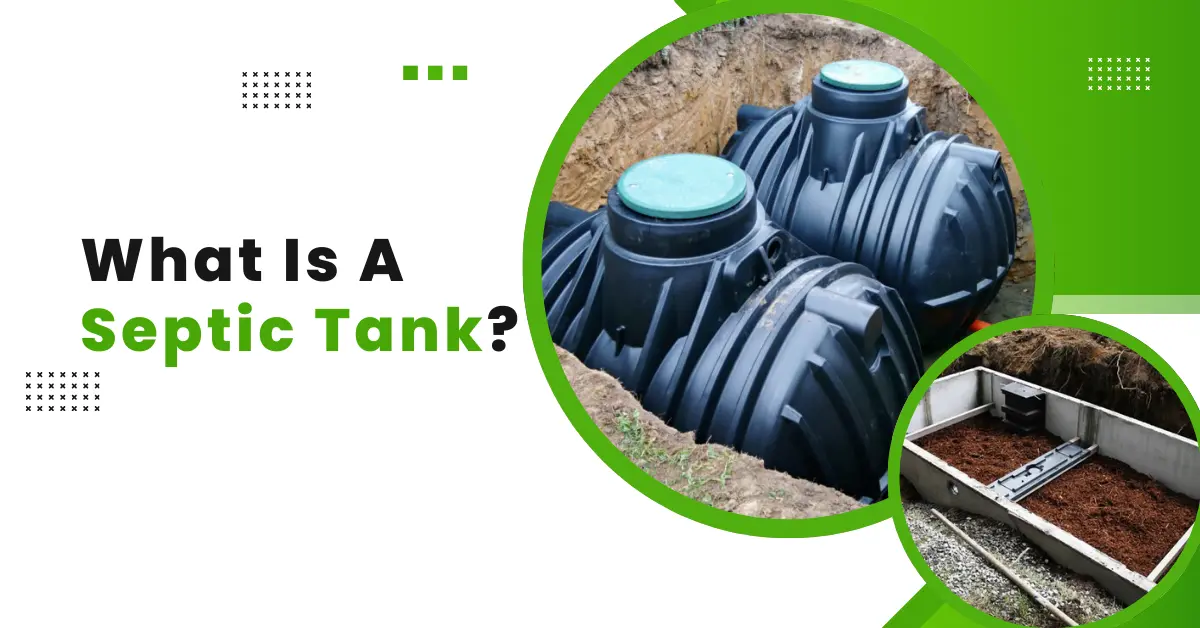
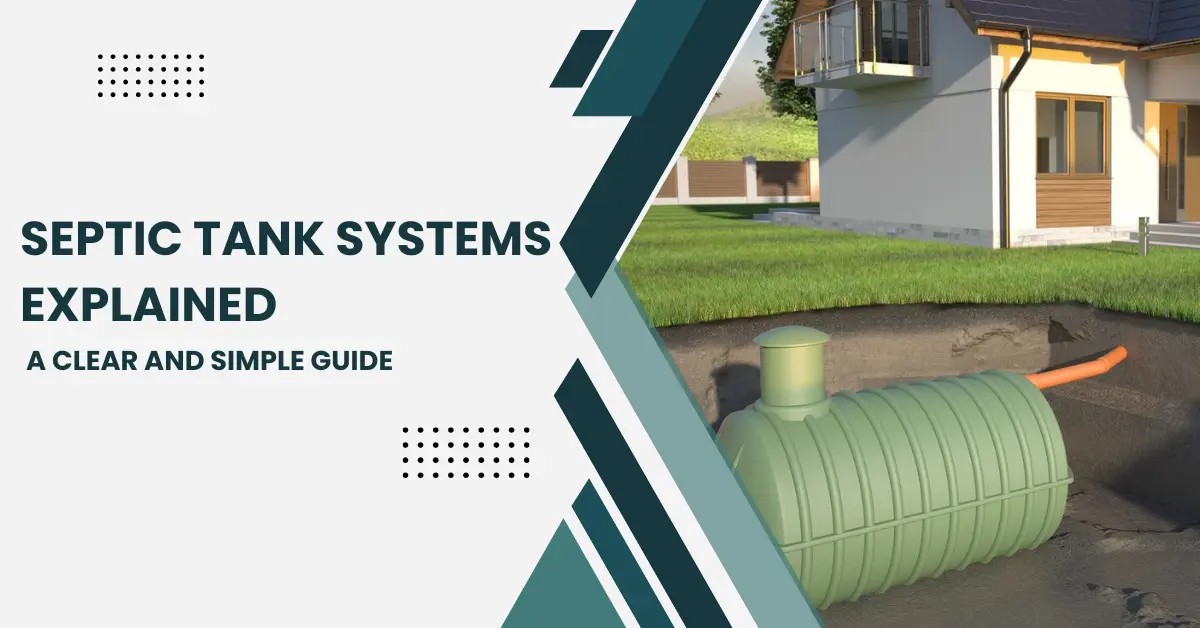
This is where it all begins. The septic tank is usually a large concrete, plastic, or fiberglass container buried underground near your home. It holds the wastewater long enough for solids to settle to the bottom (as sludge) and for oils and grease to float to the top (as scum).
Why it matters
The tank’s job is to start the treatment process by separating solids from liquids and allowing natural bacteria to begin breaking down waste. It’s the first line of defense in keeping your system working properly.
Materials commonly used:
- Concrete: Durable and heavy, ideal for long-term installations
- Fiberglass: Lightweight, corrosion-resistant, but pricier
- Plastic: Affordable and easy to install, but less stable in shifting soils
2. Drainfield (Leach Field)
Once the wastewater has been partially treated in the tank, it flows into the drainfield a network of perforated pipes laid in gravel-filled trenches. This is where the effluent spreads out and seeps into the surrounding soil.
Why it matters
The drainfield gives the water space to filter naturally through gravel and soil layers. It’s also where you’ll see problems if your system is overloaded or neglected, pooling water, or unpleasant odors usually trace back here.
3. Soil
Yes, the soil in your yard is actually part of your septic system. After the effluent leaves the pipes in the drainfield, it travels through layers of soil that remove harmful bacteria, viruses, and nutrients.
Why it matters
The soil acts like a natural sponge and purifier. Without good, absorbent soil, the system can’t finish the treatment process. That’s why soil testing is a big deal before a new system is installed.
Additional but Critical Parts of a Septic System
Beyond the three primary parts of a septic system, several supporting components help everything work smoothly. These might not be the stars of the show, but they’re just as important, especially if something goes wrong.
Inlet Pipe
This pipe connects your home’s plumbing to the septic tank. It’s the direct path for all household wastewater to reach the tank.
Key role:
Moves waste from your sinks, showers, laundry, and toilets into the tank. If this clogs, everything backs up fast.
Outlet Pipe
Located on the opposite side of the tank, the outlet pipe sends effluent to the drainfield after solids have been separated.
Key role:
Only lets liquids pass through any solid escaping here can ruin your drainfield.
Distribution Box
Not every system has one, but many do. The distribution box sits between the tank and the drainfield, dividing the effluent flow evenly between multiple leach lines.
Key role:
Ensures balanced distribution so one area of your drainfield doesn’t get overloaded.
Tank Covers / Access Lids
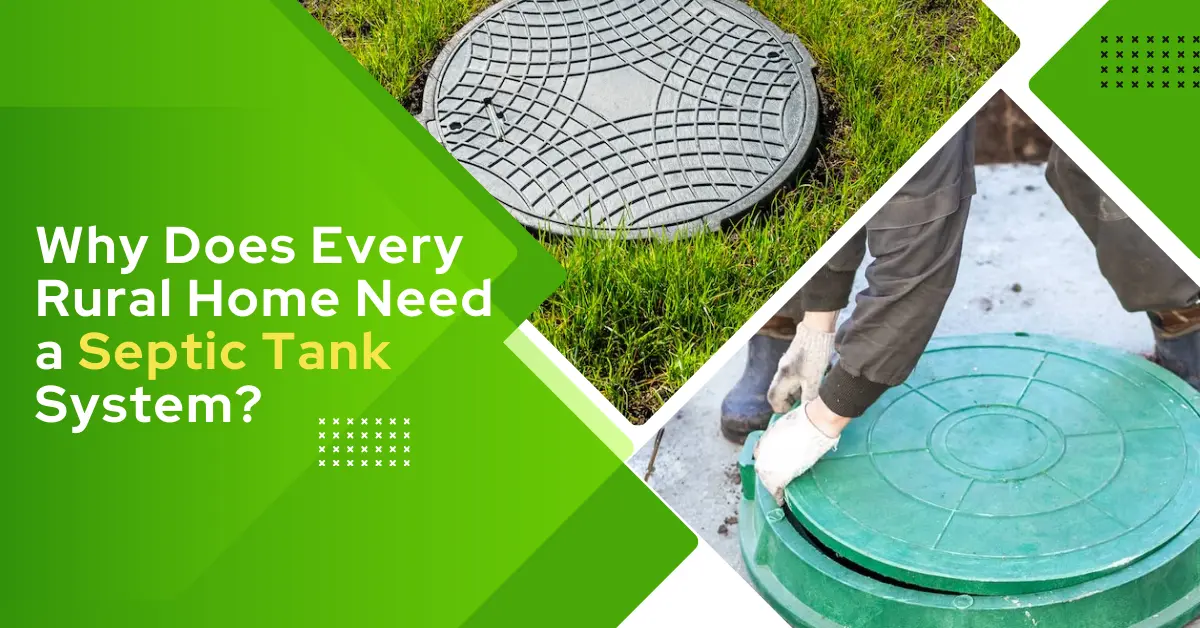
These lids might seem like an afterthought, but they’re how you (and professionals) access the tank for maintenance, pumping, and inspections.
Key role:
Allow safe, easy access to clean or inspect the system. Skipping routine checks here can turn a small issue into a full system failure.
Baffles (Inlet and Outlet)
Baffles are small but mighty. They’re positioned inside the tank at the inlet and outlet to control how wastewater flows through.
Key role:
Keep sludge and scum where they belong inside the tank. They help slow flow and prevent solids from entering the outlet pipe.
Parts of a Residential Septic System vs. a Conventional System
While the parts of a home septic system and a conventional system are mostly the same, the design and capacity can differ.
Residential systems are typically installed for single-family homes and use smaller tanks, simpler drainfields, and fewer components.
Conventional systems, often built for larger properties, cabins, or shared setups, might include:
- Larger tanks
- More complex leach field layouts
- Pump systems or advanced treatment components
Optional or Specialized Components You Might Find
Some systems include additional parts for special circumstances, environmental concerns, or newer regulations. These aren’t always required but can be crucial depending on your setup.
Chlorination Chamber
Used to disinfect treated water before it’s released into the environment, especially near wells or lakes.
So, is a chlorination chamber part of a septic system?
Yes, but only in systems where extra treatment is needed.
Soak Pit
More common in older or off-grid systems, soak pits are deep holes filled with gravel that let wastewater slowly absorb into the ground.
Is soak pit a part of septic system?
In older systems, yes. In modern ones, not usually.
Septic System UV Unit
These high-tech units use ultraviolet light to kill bacteria in the effluent before it’s released.
Target phrase: parts of a septic system UV
Why it matters: Offers an extra layer of treatment for sensitive environments.
Septic System Pump Components
In systems where gravity can’t do all the work like if your drainfield is uphill a pump is installed to move wastewater from the tank to the leach field.
Search term: parts of a septic system pump
Why it matters: Elevation issues require mechanical help to keep things flowing.
What Are the Functions of Each Septic System Part?
Let’s tie it all together by reviewing the functions of each key part:
- Inlet Pipe – Carries wastewater from your home
- Septic Tank – Separates solids, starts the treatment
- Baffles – Prevent solids from escaping
- Outlet Pipe – Moves liquid to the next stage
- Distribution Box – Splits effluent between leach lines
- Drainfield – Distributes water into the soil
- Soil – Filters and purifies water naturally
Each part plays a specific role: treat, separate, carry, or filter. When one fails, the entire system can feel the effects.
Final Thoughts
Your septic system might be underground, but its importance is massive. Knowing the parts of a septic tank system and how they work together can help you catch problems early, extend its lifespan, and avoid expensive repairs.
Routine maintenance, smart usage, and understanding the elements of a septic system all go hand in hand. If you’re ever unsure about a component or its function, don’t guess, call in a professional and protect what’s beneath your home.
FAQs
Which of the following is part of a septic system?
Common parts include the septic tank, drainfield, inlet and outlet pipes, baffles, and soil treatment areas.
What are the different parts of a septic system?
The primary elements are the tank, drainfield, and soil. Additional components include pipes, baffles, lids, and distribution boxes.
Are all septic systems built the same?
No. Systems vary based on home size, soil type, local regulations, and layout. Residential and conventional systems can differ in complexity and scale.
Do all systems have a distribution box?
Not always. Systems with multiple drain lines often include one. Simpler setups may not need it.
What materials are used to build septic tanks?
Concrete (durable), fiberglass (lightweight), and plastic (affordable). Each has pros and cons based on your soil and location.