If you’re building a new home, buying rural land, or replacing a failing septic system, it’s essential to understand the cost of an aerobic septic system.
These systems aren’t just another option; they’re a requirement in some areas due to soil conditions, lot size, or environmental regulations.
On average, an aerobic septic system costs between $10,000 and $20,000, based on the size of your system, local labor rates, and the type of soil on your property.
That’s before factoring in annual maintenance costs of $300 to $600, which cover essentials like chlorine disinfection, inspections, and routine pump-outs.
This comprehensive guide will provide you with expert insights and side-by-side comparisons of anaerobic systems.
We’ll also show you the installation process, break down ongoing costs, highlight what affects pricing most, and give you practical tips.
Therefore, let’s get started!
What Is an Aerobic Septic System?
Aerobic septic systems, also known as Aerobic Treatment Units (ATUs), are onsite wastewater systems that use oxygen-loving bacteria to break down organic waste more efficiently than traditional anaerobic setups.
Treatment Stages
1. Pre‑treatment (Trash Tank / Septic Tank): Wastewater enters a tank that traps non‑degradable materials like plastics and solids before moving on.
2. Aeration Chamber: An air pump (aerator) injects oxygen into the tank, and creates a well‑oxygenated environment for aerobic bacteria to thrive and rapidly digest organic matter.
3. Settling / Clarification Chamber: Heavier microbial biomass settles out. It clarifies the effluent before discharge.
4. Disinfection (optional): Some systems include chlorine tablets or UV treatment to kill pathogens for surface or spray irrigation discharge.
5. Effluent Dispersal: Treated water is released via spray irrigation, drip systems, or downsized drain fields.
Aerobic Septic System Cost Breakdown: What You’ll Pay
From installation to long-term upkeep, several variables influence your total investment.
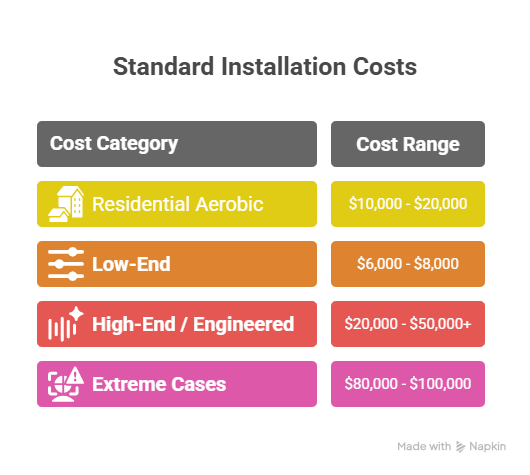
Standard Installation Costs
1. Residential Aerobic System: Generally costs between $10,000 and $20,000, reflecting moderate-sized systems on average sites.
2. Low-End Installations: Simpler setups, with straightforward percolation, minimal grading, and moderate soil conditions may cost $6,000 – $8,000.
3. High-End / Engineered Systems: For custom or code-intensive installations (sensitive environments, permitting, steep terrain), expect $20,000 – $50,000+.
4. Extreme Cases: Some engineered systems in challenging clay or coastal sites have reached $80,000 – $100,000.
Installation Costs: Step-by-Step Pricing
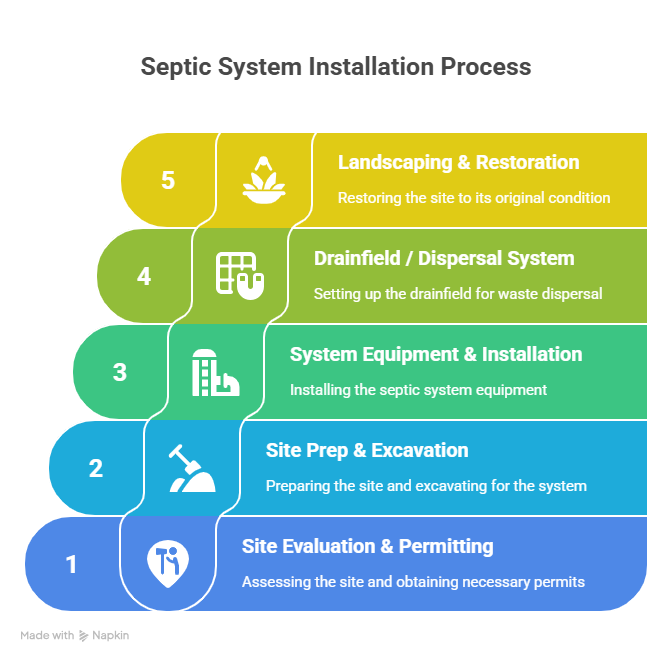
1. Site Evaluation & Permitting
- Perc tests, surveys, and fee-based soil evaluations: usually $200 – $1,500.
- Permits and health authority approval: usually $150 – $400 based on your jurisdiction.
2. Site Prep & Excavation
- Includes grading, digging tanks, and trenching: $1,000 – $5,000+, based on terrain and accessibility.
- Equipment rental and labor often cost $1,000 – $3,000 each.
3. System Equipment & Installation
- Treatment tank: $1,500 – $3,500
- Air blower & diffusers: $1,000 – $2,500
- Control panel & alarm system: $500 – $1,500
- Wiring, plumbing, and startup: $500 – $1,500.
4. Drainfield / Dispersal System
- Piping, gravel, drip/spray setup, and labor: $3,000 – $8,000+, based on design and size.
5. Landscaping & Restoration
- Backfill, grading, sod, or reseeding: $500 – $1,500.
Ongoing Annual Costs
After installation, expect several recurring expenses:
1. Maintenance Contract: Generally ranges from $175 to $600 per year, based on inspections, reporting, and included services. Averages usually around $300 – $400/year.
2. Pumping & Inspections: EPA‐recommended every 3 – 5 years, costing about $250 – $550 per pump-out.
3. Electricity: Running the aeration blower costs approximately $100 – $200/year, based on local rates and usage hours.
4. Parts Replacement: Expect to replace air pumps every 5 – 7 years (~$700 per unit based).
Key Cost Factors for Aerobic Septic System
Below is a breakdown of the real-world factors that influence how much you’ll pay.
1. Site Conditions & Soil Suitability
The first step is a percolation (PERC) test to assess how well your soil absorbs water. Poor-draining soils (clay) or overly fast-draining soils (sand) often require engineered aerobic systems.
Cost for testing goes from $450 – $1,400. It can shift your installation from $10K to $30K+ based on the outcome.
Steep slopes, hilly lots, or uneven ground require custom field layouts, trenching, or even lift pumps, all of which increase labor and equipment needs.
A high water table (common near lakes or coastal areas) limits traditional drain field use, often requiring mounded or elevated systems, which are more expensive.
2. System Type, Design & Dispersal Method
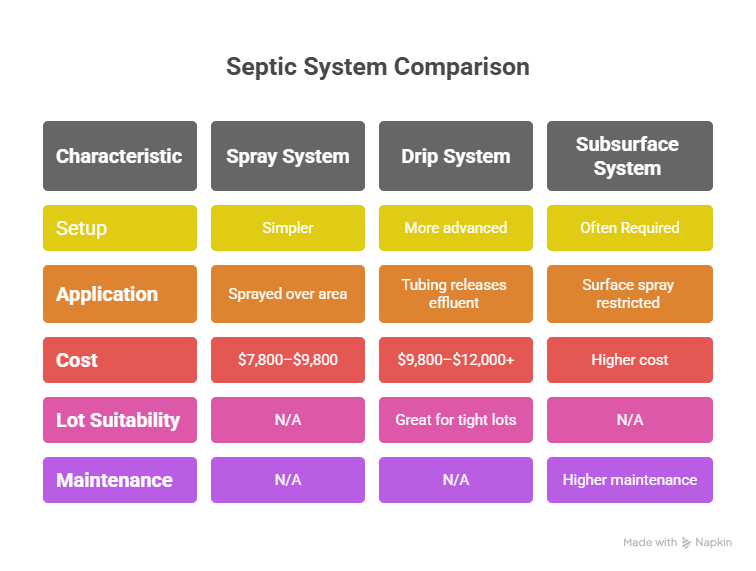
3. Regional Labor, Material, & Installation Costs
Septic installation is labor-intensive. Depending on your state or county, skilled labor rates can vary from $45 – $200/hour. Remote or hard-to-access properties often pay a premium.
Options like concrete vs. fiberglass tanks, branded aerators, or smart monitoring panels will all impact your cost. Some premium systems offer better efficiency but increase upfront investment.
Rocky soil, tree roots, and limited access for equipment will raise your labor and equipment costs significantly.
4. Utility Access & Infrastructure Needs
Aerobic systems rely on electricity and require proper utility connections. If your site isn’t “plug-and-play,” expect added costs.
In some advanced systems, irrigation lines or landscaping adjustments are needed for spray dispersal systems.
Aerobic vs. Anaerobic Septic Systems: Cost & Performance Breakdown
Let’s break it down clearly so you can make the right choice for your property and your budget.
1. Cost Comparison at a Glance
| System Type | Average Cost Range | Ideal For |
| Anaerobic | $3,000 – $8,000 | Large lots, well-draining soil, rural zones |
| Aerobic | $10,000 – $20,000+ | Tight lots, poor soil, near water sources |
Anaerobic Systems
- Lower upfront cost
- No electricity required
- Simple, passive treatment process
Aerobic Systems
- More advanced treatment
- Requires electricity
- More moving parts & ongoing maintenance
2. Why Aerobic Systems Cost More
Aerobic systems are mini wastewater treatment plants. That means more parts, more precision, and higher costs.
- Additional Components: Aerators, control panels, timers, alarms, disinfection units
- Electricity Usage: Continuous blower operation (adds ~$100 – $200/year)
- Regulatory Requirements: Often need permits, engineering, and routine inspections
- Maintenance Contracts: Annual service is usually required by local codes
3. When Is an Aerobic System Required?
Aerobic septic systems may be required or recommended when,
- Property Size is Limited
- Soil is Problematic
- Proximity to Water Sources
- Strict Local Regulations
Installation Process: Step-by-Step Overview
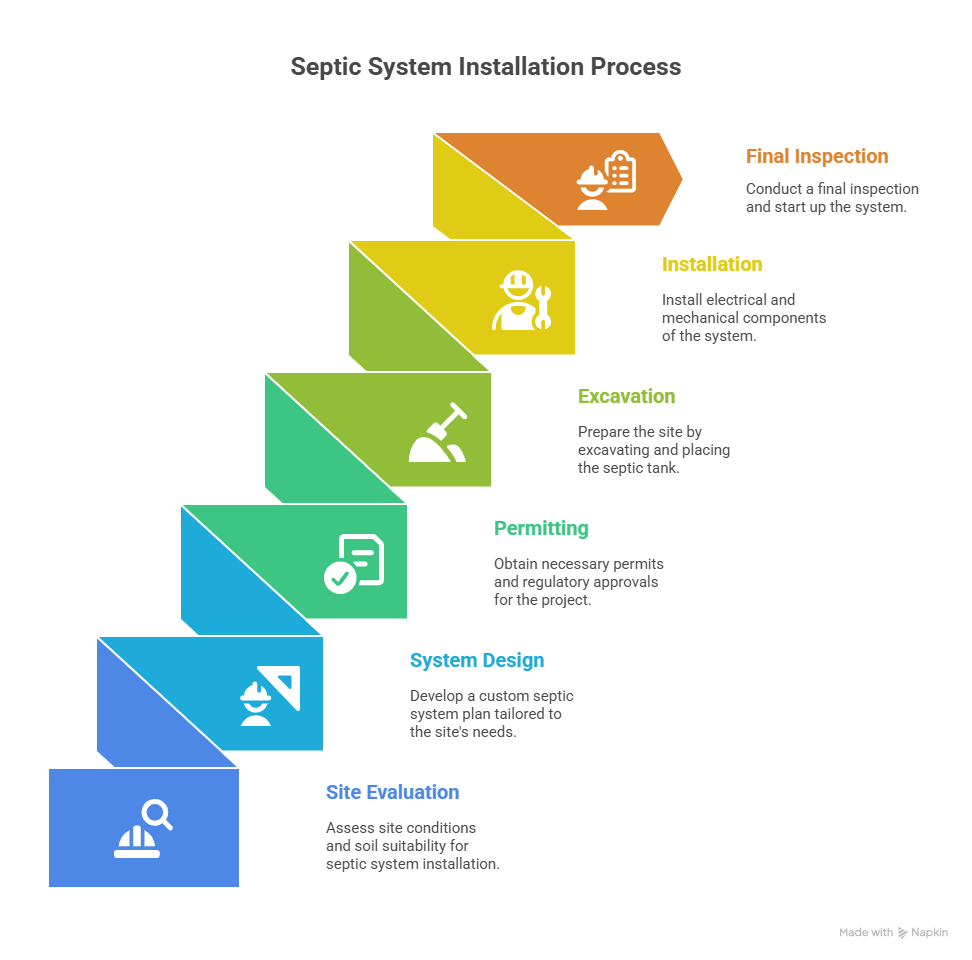
Here’s a breakdown of how the installation generally unfolds.
1. Site Evaluation & Soil Testing
Before construction, a licensed professional conducts a percolation (PERC) test to assess how well your soil absorbs water. This determines the type and placement of your septic system.
The process also includes a topographical survey, checking water tables and environmental risks, and reviewing lot boundaries and setback requirements.
2. Custom System Design
A licensed engineer designs the septic system based on your property’s conditions and local regulations.
The design outlines tank sizes and locations, the type of dispersal method (drip, spray, or subsurface), aeration and disinfection components, and electrical plans with control panel specifications.
3. Permitting & Regulatory Approvals
You’ll need approvals from the local health department and possibly the county environmental board or zoning office.
This ensures your system is environmentally safe and complies with local codes. Approval timelines can vary from a few days to several weeks.
4. Excavation & Tank Placement
Once permits are approved, the contractor begins installation by digging trenches and placing key components such as the pretreatment tank, aerobic treatment unit, pump tank (if needed), and the drain or dispersal field.
This stage also involves grading the land to ensure proper flow and future maintenance access.
5. Electrical & Mechanical Installation
Specialized installers will connect the system to electricity, install air pumps, blowers, alarms, and timers.
Then, they’ll set up the disinfection unit (such as a chlorine feeder or UV system), and wire and program the control panel for automated operation.
6. Final Inspection & System Startup
Once the system is installed, a licensed inspector, generally from the local health department, must approve it before use.
They verify system integrity, ensure components match the engineered design, and check that electrical and mechanical systems function properly.
After passing inspection, the system is started, tested, and enters regular maintenance.
FAQs
1. Can I flush toilet paper with an aerobic septic system?
Yes, you can flash standard, septic-safe toilet paper with an aerobic system. These systems handle waste breakdown more efficiently than anaerobic systems due to oxygen-loving bacteria. However, you must avoid fushable wipes, paper towels, or feminine hygiene products.
2. What’s the life expectancy of an aerobic system?
With proper care, an aerobic septic system can last 25 to 40 years or more. You can do annual inspection, regular pumping, and timely replacement when necessary for an extended lifespan.
3. Does it work during a power outage?
Not fully, Aerobic systems don’t work fully without electricity. They rely on electricity to power the air pump, control panel, and disinfection system. During an outage, the system stops treating waste aerobically. Short outages usually cause no harm, but longer ones can lead to odor, buildup, or even backup.
4. Is an aerobic system better for the environment?
Yes, an aerobic system is better for the environment, because it produces cleaner effluent (treated wastewater), which is safer for groundwater, nearby wells or drinking water sources, and environmentally sensitive areas.
5. Can I upgrade an anaerobic system to aerobic?
In many cases, yes, you can upgrade an anaerobic system to aerobic. However, it depends on your existing tank setup, soil conditions, and local regulations. The upgrading may involve retrofitting an aerator and control unit into your current tank and adding a disinfection system.
Bottom Line
An aerobic septic system is a higher upfront investment, generally ranging from $10,000 to $20,000. However, it delivers cleaner wastewater treatment, better environmental safety, and long-term value for properties with poor soil, small lots, or strict local codes.
If you’re building on challenging land, living near water sources, or want the most advanced residential wastewater solution, an aerobic system is often worth every dollar.
While it does come with maintenance responsibilities and reliance on electricity, the system’s performance, durability, and eco-friendliness make it a smart choice in many modern setups.
Always consult with a licensed septic installer or local health department before making a decision. The right choice depends on your land, lifestyle, and long-term plans.
Flush smart, live clean!