
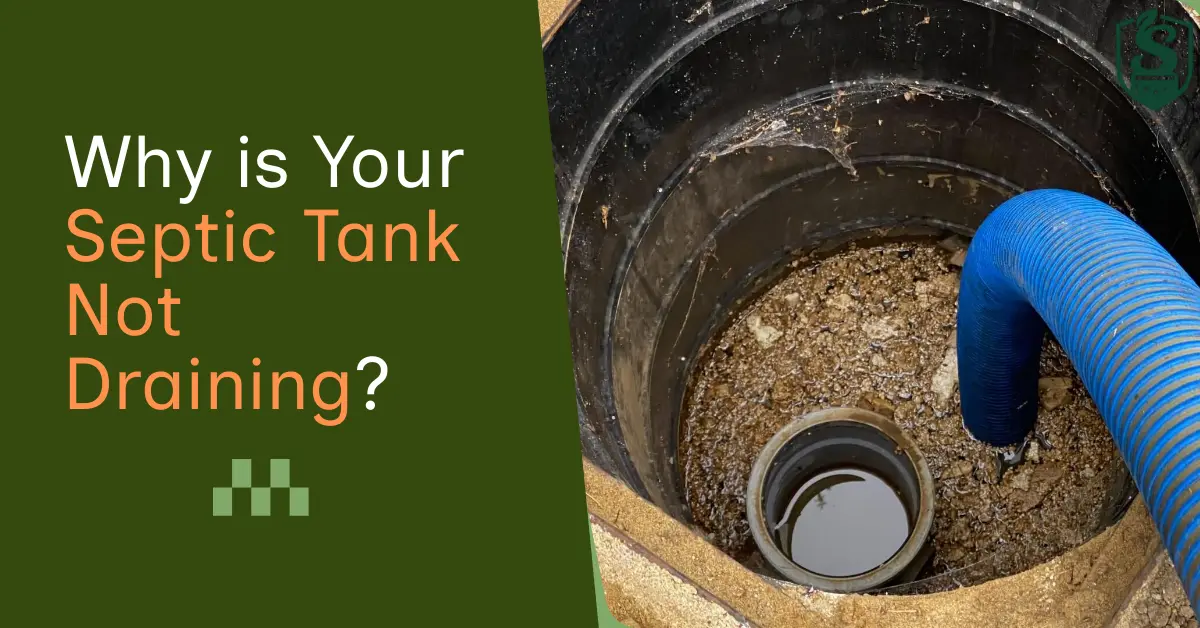
When your septic tank stops draining, it’s more than just a minor inconvenience; it’s a messy, stressful situation that can quickly spiral into property damage, foul odors, and expensive repairs.
So, why is your septic tank not draining?
Whether the problem is caused by too much water, clogs in the system, or even the weather, knowing what’s behind the issue is the first step toward fixing it.
In this guide, we’ll walk you through the most common reasons your septic tank isn’t draining, how to tell what’s going wrong, and what you can do to get everything flowing again. We’ll also cover what to watch out for after heavy rain, home remedies that actually work, and how to prevent future problems.
What Causes a Septic Tank to Stop Draining?
Let’s start with the root of the problem literally. Below are the most common reasons your septic system stops draining properly and what they look like when they happen:
Clogged Drain Field
This is one of the most common culprits. The drain field is where your wastewater gets absorbed into the soil. Over time, grease, solid waste, or sludge can build up and clog the pipes or soil pores.
When that happens, water has nowhere to go and starts backing up. You might notice squishy soil, pooling water, or even raw sewage surfacing near the drain field.
Excessive Water Usage
Your septic system is only designed to handle a certain volume of water per day. If your household exceeds that by doing too much laundry, taking long showers, or having a leaking toilet, the tank can’t process it fast enough. This leads to flooding and slow drainage.
Full or Blocked Tank
A tank that hasn’t been pumped in years can become full of sludge and solids, leaving less room for wastewater. Even if it was pumped recently, a blocked inlet or outlet baffle could stop the system from flowing properly. This bottleneck prevents wastewater from reaching the drain field.
Tree Root Intrusion
Roots are sneaky. They grow toward moisture, and if your pipes or baffles are old or cracked, roots will find their way in. Once inside, they can block or break pipes, disrupt flow, and even collapse parts of your system over time.
Heavy Rain or Saturated Soil
Even a perfectly functioning system can struggle during or after heavy rain. If the drain field soil is saturated with rainwater, it won’t be able to absorb any more wastewater from the tank, which causes water to back up inside your home.
Septic Tank Not Draining But Appears to Drain?
Sometimes the signs are subtle, your system looks like it’s working, but something’s off. Here’s how to spot a septic problem that’s hiding in plain sight.
Slow Draining Fixtures
If your sinks, tubs, or toilets are draining slowly, it could mean the system is partially blocked, or the drain field is beginning to fail. It’s a subtle warning sign that trouble is brewing below the surface.
Intermittent Backups
When your system backs up now and then, especially after heavy use or rain it usually means the drain field or pipes are struggling to keep up. This can indicate a problem with saturation, roots, or a partial blockage that hasn’t reached full-blown failure yet.
How to Diagnose a Septic Tank That’s Not Draining
Once you’ve figured out the cause, it’s time to fix the issue. Here are the most effective DIY and professional solutions depending on what’s gone wrong:
Check the Ground Around Your Tank
Walk around the septic tank and drain field area. Look for standing water, overly lush grass, or areas that feel spongy underfoot. These can be signs of a system that’s overloaded or leaking.
Inspect the Tank and Baffles
Carefully remove the tank lids (if you’re comfortable doing so) and check the water level. If the level is high, your system is likely full or blocked. Also inspect the inlet and outlet baffles to make sure they’re not clogged with grease, scum, or debris.
Assess Water Usage
Think back on your recent water habits. Have you done back-to-back laundry loads, hosted guests, or ignored a slow leak? All of these can push your system past its limit.
Evaluate Weather Conditions
If your tank stopped draining after several days of rain, the problem may be temporary soil saturation. While not ideal, these situations often resolve once the ground dries out, provided your system is otherwise healthy.
What To Do When Your Septic Tank Won’t Drain
When your tank won’t drain, it’s usually a sign of something serious, but don’t panic. Below, we’ll walk through the first steps you should take to get the system flowing again:
Pump the Tank
Start with a professional pump-out. This reduces internal pressure and lets you inspect the inside more clearly. While not a permanent fix, it gives you time to identify the root cause without risking a messy overflow.
Clean Inlet and Outlet Baffles
Check for blockages at the tank’s entry and exit points. Sludge or debris buildup in the baffles can prevent wastewater from entering or leaving properly, creating backup pressure inside the system.
Unclog or Repair the Drain Field
If your drain field is the issue, jetting the lines or aerating the soil might help. In severe cases, sections of the field may need to be replaced. This is best handled by a licensed septic professional with experience diagnosing field failure.
Reduce Water Usage Immediately
Cut back hard no laundry, no long showers, and no dishwashing. Minimizing water usage helps relieve pressure on your system and buys time while you figure out a fix.
Call a Septic Professional
If nothing’s working, bring in the pros. They can inspect the entire system, run a camera through the lines, and give you a clear diagnosis something DIY methods often miss.
Septic Tank Not Draining After Rain: What You Should Know
If your tank backs up after a storm, the problem may not be your system it might be the weather. Here’s what to keep in mind when heavy rain rolls through.
How Rain Affects the Leach Field
Excess rainwater saturates the soil, especially around your drain field. When the soil is fully soaked, wastewater has nowhere to go so it sits in the tank, causing slow drains or backup in your house.
Temporary Fixes and Long-Term Solutions
To manage this short-term, reduce all water use during and after storms. Long-term, consider regrading your yard, adding drainage channels or gutters, or relocating the field to higher ground if it floods frequently.
Home Remedies for a Backed-Up Septic Tank
There’s plenty of DIY advice online but most solutions are hit-or-miss. Here’s what might help and what definitely won’t.
Baking Soda and Vinegar
This combo is gentle enough for household drains and can help dislodge minor buildup. But it won’t do much for deeper septic issues like baffle clogs or field failure.
Septic-Safe Enzyme Products
Bacteria-based additives can help your tank maintain the right microbial balance, which is great for maintenance. But they won’t fix a current blockage or clear out a failing drain field.
How to Prevent Septic Drainage Problems in the Future
Avoiding problems is always better than dealing with them. These simple habits can save you thousands in repairs:
Routine Pumping
Get your tank pumped every 3–5 years more often if you have a big family or use lots of water. Staying ahead of buildup keeps your system running smoothly.
Protect the Drain Field
Never drive over or build on top of your drain field. Roots from trees and compacted soil can destroy the delicate network of pipes underneath, leading to serious and expensive issues.
Use Water Efficiently
Install low-flow showerheads and toilets, fix leaks fast, and space out water-heavy tasks like laundry. The less you strain the system, the longer it will last.
When to Replace the Drain Field or Tank
Sometimes, repairs just don’t cut it. Here’s when it might be time for a full replacement:
Signs of Drain Field Failure
If you’re seeing standing water, smelling sewage in the yard, or constantly pumping your tank with no relief, your field may have reached the end of its life.
Cost Considerations
Replacing a drain field isn’t cheap it can run $3,000 to $15,000, depending on your soil and system type. But if you’re constantly battling backups, it may be the only long-term solution.
FAQs
How do I know if my drain field is clogged?
Soggy soil, strong odors, and pooling water are key signs.
What’s the difference between a full tank and a clogged system?
A full tank causes slow drains everywhere; clogs often affect just one area.
Can I unclog my septic tank myself?
Minor clogs, maybe. But serious blockages need professional tools and expertise.
Why does my septic tank fill up after rain?
Rain saturates the drain field, blocking water from exiting the tank.
Are chemical drain cleaners safe for septic systems?
No. They kill beneficial bacteria and worsen clogs.
Conclusion
A septic tank that’s not draining is more than an inconvenience, it’s a warning. Whether it’s a clog, heavy rain, or just overdue maintenance, acting quickly can save you from thousands in repairs.
Pay attention to the signs, reduce your water use, and don’t be afraid to call in a pro when DIY fixes fall short. Prevention is always easier and cheaper than restoration.