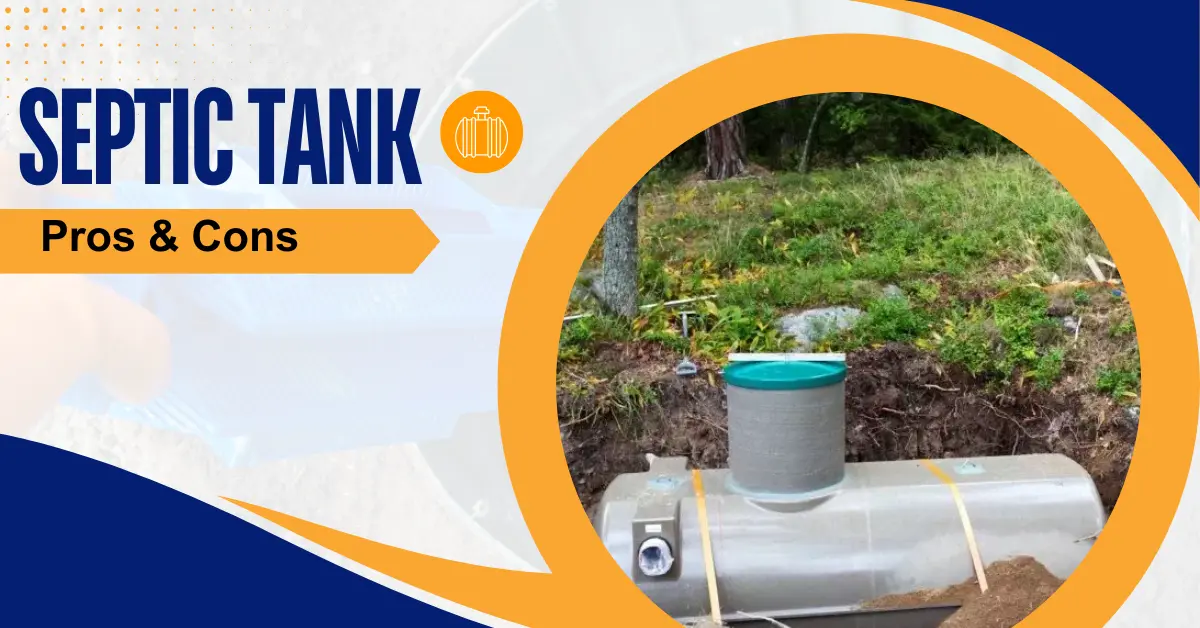

Did you know that over 25% of American households rely on septic systems to manage their wastewater instead of municipal sewer connections? Especially in rural and suburban areas, septic tanks play a critical role.
But what happens if you don’t have a septic tank where one is required? Is it illegal to not have a septic tank?
The short answer? Yes, it is illegal not to have a septic tank if you are not connected to a municipal sewer system.
Local health and building codes require a legal method of wastewater disposal, and failure to comply can result in fines, enforcement actions, or property restrictions.
In this complete guide, you’ll see when a septic system is legally required, the risks of non-compliance, and how to stay compliant with septic tank laws in your area.
Therefore, let’s get started!
Is It Illegal to Not Have a Septic Tank?
At first glance, the answer is yes. If your property isn’t connected to a municipal sewer line, you’re required to have a septic system or an approved alternative.
However, exceptions may apply if you have a verified alternative system, a temporary dwelling exemption, or a grandfathered legacy setup. That makes it not necessarily illegal.
Here’s a clear breakdown to help you understand when it’s a legal violation and when exceptions apply.
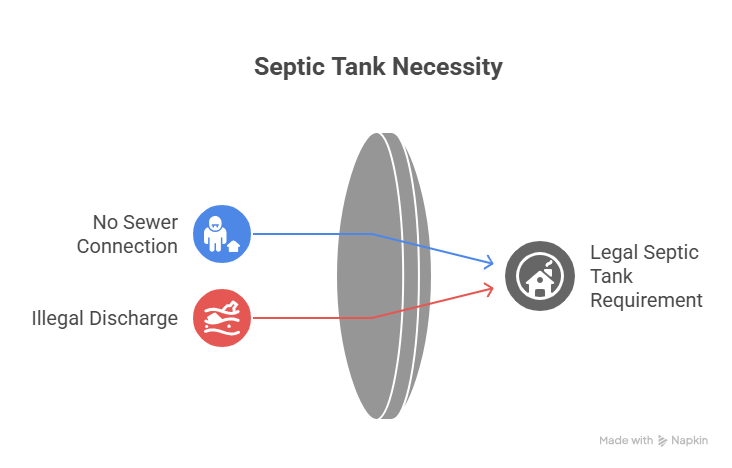
1. No Sewer Connection and No Approved Septic System
If your property lacks access to a public sewer and you do not have a permitted on-site sewage disposal system, this is a violation in nearly all jurisdictions.
Untreated sewage disposal poses serious public health risks and environmental hazards.
The EPA and most state environmental agencies strictly require septic systems in these cases to prevent contamination of drinking water and local ecosystems.
Example: Discharging raw sewage directly into the ground, a ditch, or surface water is illegal in almost all jurisdictions.
2. Illegal Discharge (Pipe Directly into Woods or Waterways)
It is explicitly illegal to discharge untreated sewage into natural areas such as forests, streams, or storm drains. This includes pipes or drainage that bypass an approved septic or sewer system.
Many counties have faced legal enforcement actions and fines against homeowners who attempt to dispose of wastewater this way.
The Clean Water Act (CWA) in the U.S. also prohibits discharges that pollute surface waters without proper permits.
Where It May Not Be Illegal Not to Have a Septic Tank
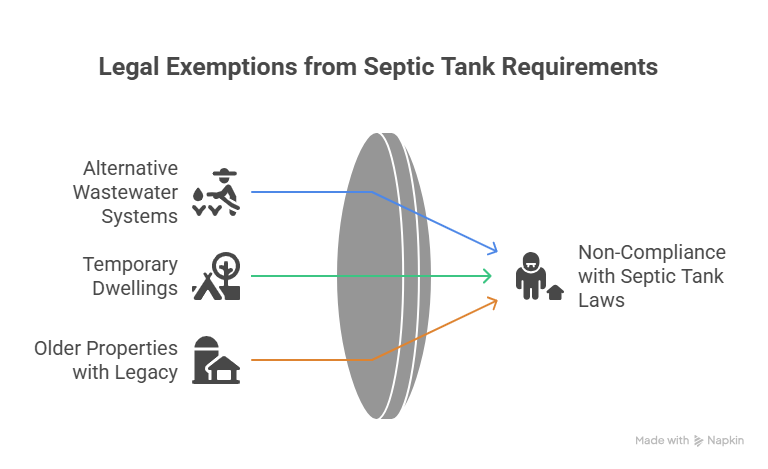
1. Approved Alternative Wastewater Systems
Some rural or remote properties use alternative on-site wastewater treatment systems instead of traditional septic tanks, such as aerobic treatment units, composting toilets, or greywater recycling systems.
2. Temporary Dwellings
Certain temporary structures, such as mobile homes, cabins, or campsites, may be exempt from septic system requirements under local laws. However, these exceptions vary widely and often require alternative sanitation solutions.
3. Older Properties with Legacy
Some older systems installed under previous regulations may remain legal under a “grandfathered” status. These legacy systems are allowed to remain operational as long as they don’t pose health risks, but may need upgrades upon property sale or significant renovation.
When Is a Septic Tank Legally Required?
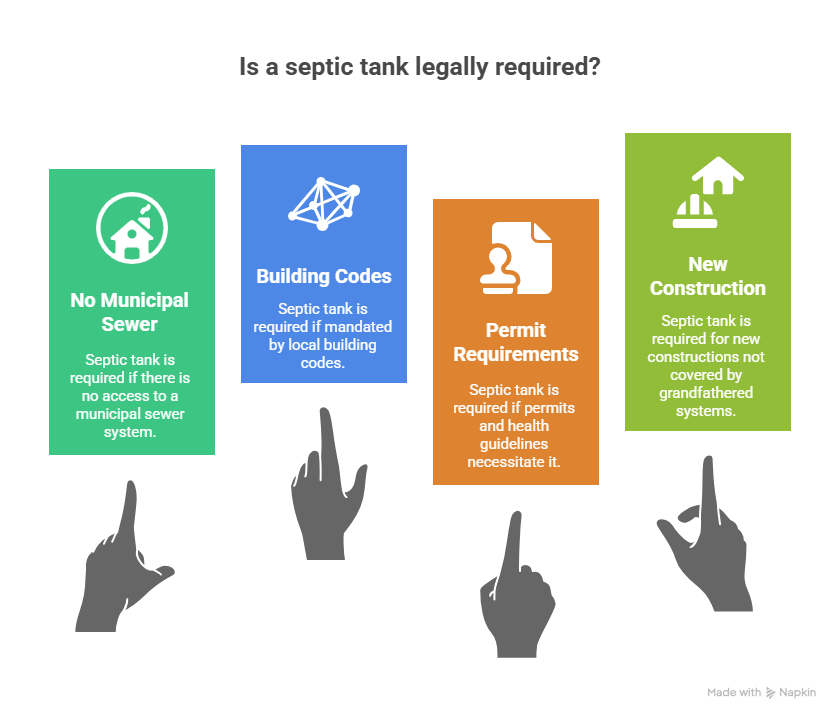
Septic system laws vary widely based on your location, but a few core factors determine the legal obligation to install and maintain a septic system.
1. Living in Areas Without Municipal Sewer
If your property is located outside the reach of a municipal sewer system, a septic tank is almost always required by law.
According to the U.S. Environmental Protection Agency (EPA) and most state health departments, homes in rural or suburban areas without access to public sewers must use a septic system with a tank and drain field to safely treat their wastewater.
2. Building Codes and Local Zoning Regulations
Septic system regulations generally require a minimum lot size, safe distances from wells and water bodies, and proof of adequate soil drainage through a percolation test.
Without passing this test, most counties won’t issue a permit. These rules also dictate system design and tank size based on property needs.
3. Permit Requirements and Health Department Guidelines
In most areas, you must get a permit before installing, repairing, or replacing a septic system. This usually involves submitting detailed plans, passing site inspections and soil tests, and meeting health department standards.
4. Grandfathered Systems vs. New Construction
If your property has an older septic system installed before current regulations, it may be “grandfathered in”. It allows you to continue using it even if it doesn’t meet today’s codes, as long as it operates safely.
However, if you plan to sell the property or undertake major renovations, most local authorities will require a septic inspection. If the system fails to meet modern standards, you may need to upgrade it to ensure safety and compliance with relevant laws and regulations.
Legal & Financial Consequences of Non-Compliance
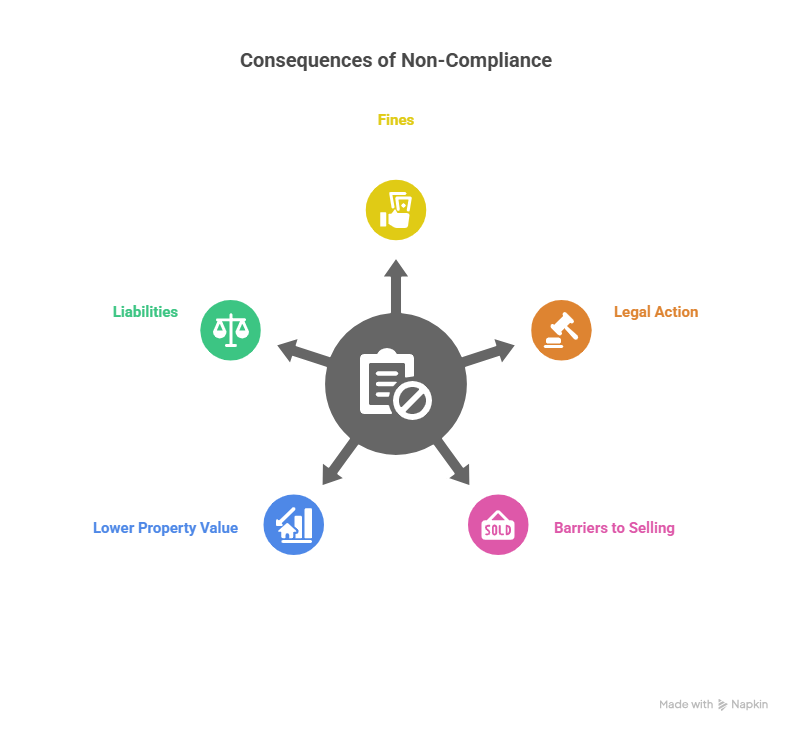
Ignoring septic system laws or failing to install a legally compliant septic tank can lead to serious legal troubles. Here’s what happens if you don’t comply.
1. Fines from Local Authorities
Operating without a required septic system can lead to fines from local health or environmental agencies. Penalties often range from hundreds to thousands of dollars, with repeat violations resulting in even bigger consequences.
2. Legal Action: Injunctions and Forced Installation
Beyond fines, authorities may take legal action, such as issuing court orders to repair or install septic systems, halting property use through injunctions, or, in severe cases, enforcing system installation at the owner’s expense.
3. Barriers to Selling or Refinancing the Property
Properties without a compliant septic system often face major obstacles in real estate deals. Lenders may deny financing, title companies may delay insurance, and home inspections can deter buyers or drive down the sale price.
4. Lower Property Value and Higher Inspection Risks
A non-compliant or failing septic system can significantly lower your property’s value, with buyers often demanding expensive repairs before closing.
Failed inspections may delay or derail sales, while illegal or DIY systems raise serious concerns during due diligence.
5. Unpermitted or DIY Systems as Major Liabilities
Installing or repairing septic systems without proper permits or professional oversight is risky and often illegal. Unpermitted systems may violate regulations, pose environmental hazards, and result in costly cleanup, retrofits, or removal orders.
Common Scenarios Explained
Many homeowners and buyers have questions about septic tanks and legal requirements. Here are straightforward answers to some of the most frequently asked questions:
Scenario 1: “I bought land in the country, do I need a septic system?”
If your property is not connected to a municipal sewer system, the answer is most likely yes. Rural and undeveloped lands generally require an on-site septic system or an approved alternative to treat wastewater safely.
Before building, check with your local health department about soil testing, permits, and septic installation requirements.
Scenario 2: “Can I live off-grid legally without one?”
Living off-grid without a septic tank is possible, but only if you have an approved alternative wastewater treatment system, such as a composting toilet or an aerobic treatment unit, and if your local regulations allow it.
Always verify with local authorities to ensure your wastewater disposal method is legal and environmentally safe.
Scenario 3: “What if my system is old or failing?”
Older septic systems may be grandfathered, but must be properly maintained to avoid health risks. If your system is failing, many jurisdictions require repair or replacement before selling the property or making major renovations.
Regular inspection and pumping (every 3-5 years) are critical to prevent costly failures.
Scenario 4: “What if my wastewater just drains into the woods?”
Discharging untreated wastewater directly into the environment, such as woods or streams, is illegal in almost all areas and poses serious health and environmental hazards.
If you discover this on your property, you must take immediate action to install a compliant septic or approved treatment system to avoid fines and legal consequences.
Scenario 5: “Can I sell my home without a septic system?”
Selling a home without a legally compliant septic system is extremely difficult and often not allowed. Lenders, inspectors, and title companies typically require proof of a functioning, permitted wastewater system.
Non-compliance can lead to reduced offers, transaction delays, or even the inability to sell.
Who Regulates Wastewater Systems?
Here’s how oversight is organised in the U.S.
1. Federal Oversight: EPA & National Standards
The U.S. Environmental Protection Agency (EPA) does not directly regulate traditional home septic systems. Instead, it sets overarching environmental standards through major federal laws.
The Clean Water Act (CWA), through the National Pollutant Discharge Elimination System (NPDES), regulates systems discharging into surface waters.
The Safe Drinking Water Act Underground Injection Well (UIC) program applies to large-capacity systems injecting waste underground.
EPA also issues guidelines, technical manuals, and model programs to support state and local regulators in managing onsite wastewater systems.
2. State & Tribal Authorities
Individual states and tribal governments enact and enforce septic and onsite system regulations under state public health and environmental statutes.
States approve and designate local health departments or environmental protection agencies to issue permits, conduct inspections, and enforce wastewater treatment rules.
Some states authorise private or third-party agencies to help administer permitting for alternative or engineered systems.
3. Local & County Regulators
County or city health departments are responsible for issuing septic permits, conducting soil/site evaluations, zoning reviews, inspections, and responding to complaints.
Local agencies may enforce stricter standards than the state, overseeing system siting, design, installation, operation, maintenance, and handling complaints or violations.
Alternatives to Traditional Septic Systems
These options can be both environmentally friendly and compliant with local regulations, but understanding the rules is key.
1. Composting Toilets
Composting toilets use natural biological processes to break down waste without water or a septic tank.
Ideal for off-grid cabins, tiny homes, and remote sites, they reduce water use and produce nutrient-rich compost. Installation requires local health department approval.
2. Greywater Reuse Systems
Greywater systems collect and treat wastewater from sinks, showers, and laundry (excluding toilets) for safe reuse in irrigation or flushing.
They reduce wastewater volume entering septic tanks or sewer lines. Proper design and permits are essential to prevent groundwater or surface water contamination. Greywater reuse is increasingly popular in water-scarce areas as an eco-friendly solution.
3. Engineered Treatment Units (Aerobic Systems)
Engineered systems like aerobic treatment units (ATUs) use oxygen to speed up organic waste breakdown, producing cleaner effluent than traditional septic tanks.
Ideal for limited space, poor soil, or sensitive environments, ATUs require regular maintenance and electricity. Permits and inspections are mandatory to ensure compliance.
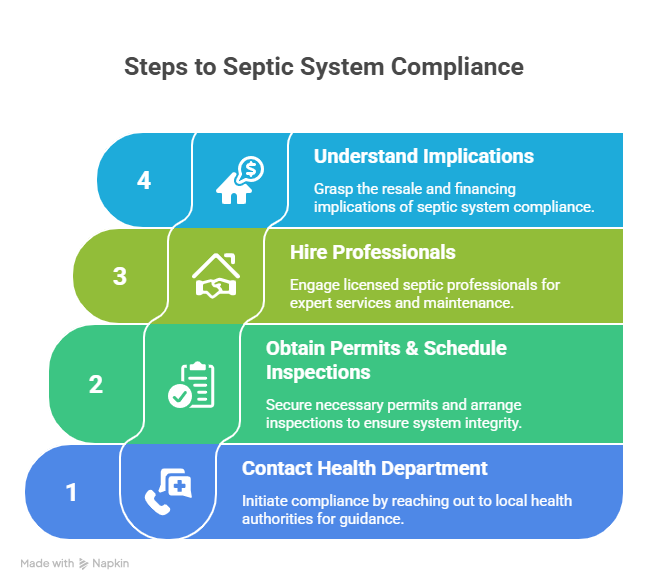
How to Stay Compliant with Septic System Regulations?
Follow these key steps to stay on the right side of the law.
1. Contact Your Local Health Department
Your local health or environmental agency is the best resource for septic system requirements. They offer guidance on building codes, approved system types, soil testing, and site evaluations.
2. Obtain Necessary Permits and Schedule Inspections
Before installing, repairing, or upgrading a septic system, always obtain necessary permits. In addition, schedule required inspections during construction, and ensure certified officials approve the final installation.
3. Hire Licensed Septic Professionals
Hire licensed, experienced septic installers and inspectors to ensure proper design, installation, and maintenance.
Professionals understand local codes, handle permits, deliver quality workmanship, and provide maintenance to extend system life and prevent costly repairs.
4. Understand Resale and Financing Implications
Compliance affects your property’s marketability and financing. Lenders generally require proof of a permitted, functioning septic system. Home inspectors verify compliance, influencing sale terms; non-compliance can delay sales, lower offers, or demand expensive upgrades.
The Risks of Not Having a Legal Wastewater System
Here’s what the risks are.
1. Legal Consequences
Violation of Local or State Codes: In most U.S. jurisdictions, it is illegal to discharge household wastewater without an approved treatment system.
Fines & Penalties: Local health departments may impose daily fines or flat penalties, which can range from hundreds to thousands of dollars based on the severity and duration of the violation.
Court Action: Continued non-compliance can lead to legal injunctions, forced removal, or even criminal charges for environmental negligence.
Example: In states like Florida and California, unauthorised wastewater disposal can be prosecuted under environmental health laws.
2. Financial Repercussions
Property Devaluation: A property without a legal wastewater system is often considered uninhabitable or unsellable. Buyers and lenders will almost always require proof of an approved septic or sewer connection.
Loan & Insurance Issues: Mortgage lenders and insurers may decline applications for properties that don’t meet sanitary code requirements.
Costly Retrofits: If you’re caught without a system, installing one later, especially under tight timelines or fines, can cost $10,000 – $30,000+, especially in areas requiring engineered solutions.
3. Real Estate & Ownership Risks
Failed Home Inspections: During sale or refinancing, the lack of a legal wastewater system will likely result in a failed inspection, delaying or terminating transactions.
Disclosure Violations: Sellers who hide septic issues or lack of permits risk lawsuits for nondisclosure.
4. Health & Environmental Hazards
Groundwater Contamination: Raw sewage seeping into soil or waterways can pollute wells, rivers, and lakes. It poses serious risks to humans, wildlife, and drinking water.
Spread of Disease: Untreated waste may carry pathogens (E. coli, Giardia, Norovirus), threatening public health.
Environmental Violations: Discharging waste into the environment without treatment violates the Clean Water Act and can trigger EPA enforcement in serious cases.
5. Emergency Remediation Orders
If local authorities deem your property a public health hazard, they can issue a “Cease” order, mandate immediate remediation, and also evict occupants until the system is brought up to code.
Frequently Asked Questions (FAQ)
Is it illegal to sell a house without a septic tank?
In most cases, yes, selling a property without a legally compliant septic system or municipal sewer connection is illegal or heavily restricted. Lenders, inspectors, and title companies usually require proof of an approved wastewater treatment system before closing a sale.
What can I use instead of a septic tank?
Alternatives to traditional septic tanks include composting toilets, greywater reuse systems, and engineered treatment units like aerobic systems. These options are often allowed in areas where conventional septic systems are impractical, but they require permits and must meet local health and environmental regulations.
How do I report an illegal septic system?
If you suspect a septic system is illegal, report it to your local health department or environmental protection agency. Many jurisdictions have hotlines or online reporting tools to address these violations promptly and protect public health.
What are the penalties for installing a septic system without a permit?
Installing a septic system without the proper permits can result in fines, mandatory system removal or replacement, and legal action. Penalties vary by location but can include high financial costs and delays in property use or sale.
Final Thoughts
While it’s not always outright illegal to be without a septic tank, it is almost always regulated by local, state, or federal authorities.
Compliance isn’t just about avoiding fines or legal trouble; it’s about protecting public health, preserving the environment, and safeguarding your property’s value.
Proper system care, timely inspections, and due diligence when buying or selling are essential steps every homeowner should prioritise.
Don’t rely on assumptions or outdated information. Always verify your local septic system laws and permit requirements before making decisions.
When in doubt, consult your local health department or a licensed septic professional to ensure your property meets all legal and environmental standards.
Flush smart, live clean!