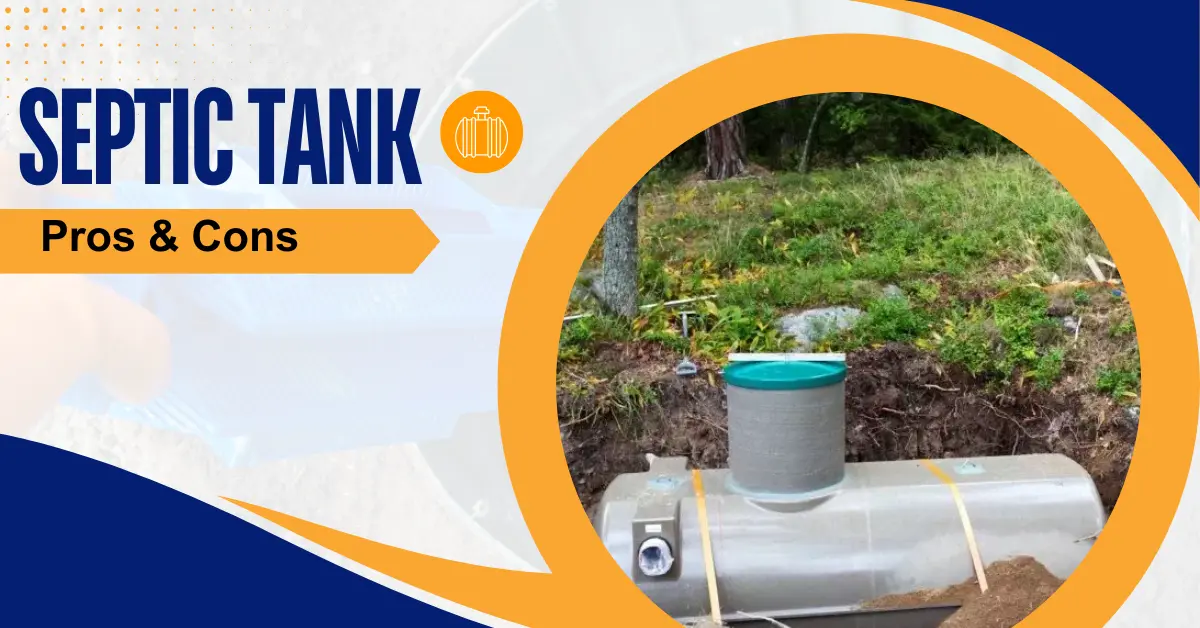
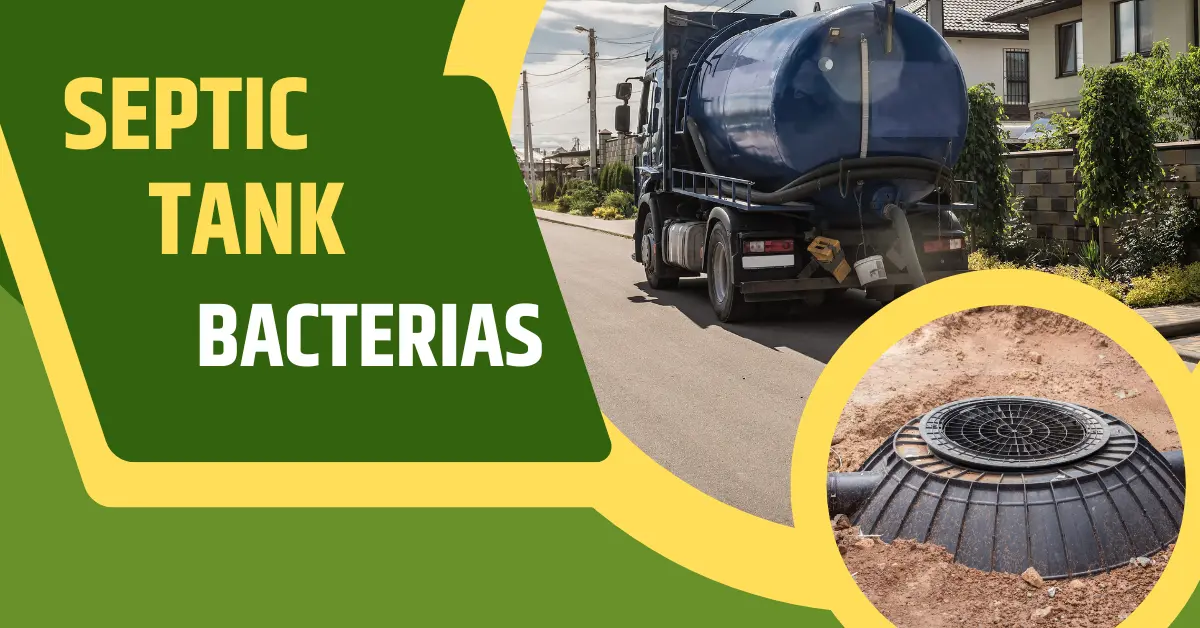
If your septic tank is backing up, smelling awful, or draining slowly, the reason might be the lack of the right bacteria.
That’s right. A healthy septic system relies on a strong colony of bacteria. These bacteria play a vital role in breaking down waste, preventing blockages, and keeping your system running efficiently and odor-free.
Among the key players are anaerobic bacteria like Clostridium, which live in low-oxygen environments and effectively break down sludge deep within the tank. Others, like Bacillus subtilis, help liquefy grease and organic matter fast.
But not all bacteria are created equal. Choosing the best bacteria for septic tank health is what separates problem-free systems from expensive repairs.
In this guide, we’ll get to know why bacteria are essential, break down the difference between aerobic and anaerobic strains, and show you how to naturally boost bacterial activity.
Therefore, let’s get started!
What Are Septic Tank Bacteria?
Septic tank bacteria are microscopic organisms that digest organic waste in your septic system.
They are essential for converting solid waste into simpler substances, facilitating the separation of waste into layers: scum (top), effluent (middle), and sludge (bottom).
They are also crucial for,
- Reducing Odors: By decomposing waste efficiently, bacteria minimize the production of foul-smelling gases like hydrogen sulfide.
- Digesting Solids: Bacteria break down complex organic materials into simpler substances, preventing sludge buildup.
- Maintaining System Efficiency: A healthy bacterial population ensures smooth wastewater flow.
Types of Bacteria and Microorganisms in Septic Systems
Here’s an overview of the key types of bacteria and microorganisms involved in septic systems.
1. Anaerobic Bacteria
Anaerobic bacteria grow in oxygen-free environments, which makes them dominant in conventional septic tanks.
Their main job is to break down solid waste through a process called anaerobic digestion. During this, they turn complex waste into simpler things like methane, carbon dioxide, and water.
This helps reduce how much sludge builds up in the tank and keeps the system working longer without needing frequent pumping.
2. Aerobic Bacteria
Aerobic bacteria need oxygen to live and are usually found in the drain field or in special aerobic treatment systems.
They’re very good at breaking down waste quickly, which helps control odors and speeds up the decomposition process.
As the treated water (effluent) moves through the soil, these bacteria keep working to clean it even more. They make the whole system more effective at purifying wastewater.
3. Facultative Bacteria
Facultative bacteria can work with or without oxygen.
This flexibility lets them break down waste in different parts of the septic system. They also keep the treatment process going smoothly even when conditions change.
4. Other Microorganisms
Beyond bacteria, septic systems host a variety of other microorganisms that aid in waste treatment.
Protozoa are tiny single-celled organisms that help clean wastewater by eating bacteria and small particles.
Fungi break down harder plant materials like cellulose and help decompose things that bacteria alone can’t handle.
Nematodes and rotifers, which are microscopic animals, feed on bacteria and organic debris. Together, they help keep the microbial balance in your septic system healthy and efficient.
These microorganisms work together to treat wastewater effectively.
Best Bacteria for Septic Tank (Reviewed & Ranked)
To save you time, we’ve handpicked the best bacteria for septic tanks in 2025, based on effectiveness, user reviews, safety, and real results.
Below are top-rated solutions trusted by homeowners and eco-conscious users alike.
1. Rid-X Septic System Treatment
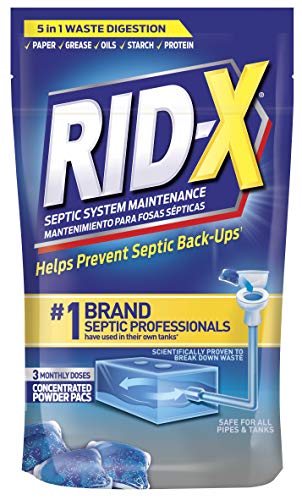
- #1 BRAND septic professionals have used in their own tanks
- BREAKS APART SEPTIC WASTE: RID-X is specifically formulated to break apart toilet paper, grease and waste that clog the …
- 100% NATURAL BACTERIA AND ENZYMES: Gentle on pipes and tanks.
Type: Powder Pacs
Best For: Overall septic system maintenance.
Key Features
- Contains natural bacteria & enzymes
- Provides a 3-month supply.
- Breaks down household waste (proteins, oils, paper)
- Safe for pipes & tanks
- Application: Once a month, flush one pre-measured packet down your toilet (preferably at night)
Pros
- Easy-to-use monthly packs
- Reduces septic backups
- Safe for all pipes and septic systems.
Cons
- Requires consistent monthly use for optimal results.
Price
It is approximately $14 for a 1-pack powder pack. Click here to check the latest price and details.
2. Green Gobbler Septic Tank Treatment Packets

- 7-IN-1 SEPTIC WASTE DIGESTION: Green Gobbler Septic Saver Pods use a powerful probiotic formula to break down the most c…
- DROP A POD TO HELP PREVENT BACKUPS & OVERFLOWS: Protect your septic tank with Green Gobbler Septic Saver. Simply drop a …
- AVOID COSTLY SEPTIC REPAIRS: Flushing one pod a month with occasional tank pumping can help you avoid expensive septic t…
Type: Dissolvable Pods
Best For: Natural bacteria treatment and odor control.
Key Features
- Contains powerful enzymes & bacteria
- Removes grease, paper, protein, & organic waste
- Monthly flush & forget formula
- Application: Drop one pod into your toilet bowl, wait 5 – 10 seconds, then flush.
Pros
- Eco-friendly and biodegradable.
- Versatile use across various systems.
- Convenient and mess-free application.
Cons
- Pods may not dissolve completely in low-flow toilets
Price
It is approximately $16 for a 6-month supply. Click here to check the latest price and details.
3. Walex Bio-Active Septic Tank Treatment Drop-Ins (12-Pack)

- POWERFUL DIGESTIVE POWER – Bio-Active Septic Tank Treatment contains beneficial septic enzymes that efficiently liquefy …
- PORTION CONTROL – With just one Bio-Active septic tank cleaner packet per month, your septic system thrives. Billions of…
- PLUMBING SAFE – Bio-Active septic tank pods tackle household waste buildup. Say goodbye to damage from household cleaner…
Type: Dissolvable Pods
Best For: Monthly maintenance and solid waste breakdown.
Key Features
- Advanced blend of enzymes and bacteria
- Odor neutralizer; formaldehyde-free and non-staining
- Keeps septic systems flowing freely
- One pod treats a 1,500-gallon tank
- Application: Drop one pod into your toilet bowl, wait 10 seconds, then flush.
Pros
- Safe for all plumbing systems.
- Simple drop-in application.
- Helps prevent backups and odors.
Cons
- It may leave residue in the toilet bowl.
Price
It is approximately $15 for 12 packets (1-year supply). Click here to check the latest price and details.
4. ONE FLUSH Septic Tank Treatment Packets

- ONE FLUSH septic tank treatment packets contain 56 billion beneficial bacteria that digest grease, fats, oils, paper, an…
- ONE FLUSH septic treatment packets are made in the USA. All natural, environmentally friendly. Each monthly pack of ONE …
- ONE FLUSH septic treatment packets are your first step to make sure that you never have septic problems again. Protect y…
Type: Dissolvable Powder Pods
Best For: Monthly maintenance to prevent backups and odors
Key Features
- 12 pre-measured packets for a year’s supply
- Contains natural bacteria and enzymes
- Safe for all septic systems and plumbing
- Application: Simply drop one packet into the toilet each month and flush
Pros
- Cost-effective solution.
- Environmentally friendly and safe for all plumbing systems.
- Easy monthly drop-in packets.
Cons
- Requires a monthly application.
Price
It is approximately $18.95 for a 1-year supply. Click here to check the latest price and details.
5. Roebic Laboratories K-37-H-3 Septic Tank Treatment

- Formulated with patented Roetech bacteria for efficient breakdown
- Degrades paper, proteins, starch, and FOG, ensuring optimal septic system function
- Safe for all plumbing and systems, preserving your plumbing infrastructure
Type: Liquid
Best For: Restoring bacterial balance and breaking down solids
Key Features
- Contains patented ROETECH bacteria
- Breaks down paper, proteins, and grease
- Safe for all plumbing and systems
- Treats up to 1,000-gallon septic tanks
- Liquid formula for efficient breakdown of solids
- Application: Pour the entire 64 oz bottle into the toilet bowl & flush twice to ensure it goes down.
Pros
- Safe for all plumbing and septic systems
- Biodegradable and non-corrosive
- Effective in reducing odors and clogs
Cons
- May need repeated use for best results
- Requires measuring for application
Price
It is approximately $17 for a 64-oz bottle. Click here to check the latest price and details.
6. Septic Tank Treatment Pods
- Worry-Free Septic System Maintenance: Dr. Raifya’s Septic Tank Treatment pod features specially selected bacterial strai…
- 5X More Efficient Than Leading Brands: Each 1.05 oz pod contains tens of billions of beneficial bacteria and active sept…
- All-Natural: Made from 100% natural ingredients, free from harsh chemicals, and safe for pipes, toilets, and tanks. Our …
Type: Dissolvable Pods
Best For: Monthly maintenance to prevent backups and odors
Key Features
- Concentrated formula with beneficial bacteria
- Easy-to-use pod
- It rapidly breaks down paper, oils, grease, starch, and proteins in your septic tank
- Safe for all septic systems
- Made from 100% natural ingredients, free from harmful chemicals
- Application: Drop the pod into the toilet bowl, wait a few seconds for it to dissolve, then flush once to activate treatment.
Pros
- Helps maintain a healthy septic system
- Reduces the risk of costly repairs
- Convenient and mess-free application
Cons
- It may not be suitable for a large-capacity tank
- Limited information on long-term effectiveness
Price
It is approximately $19 for 24 pods. Click here to check the latest price and details.
7. Bio-Clean Drain Septic Bacteria
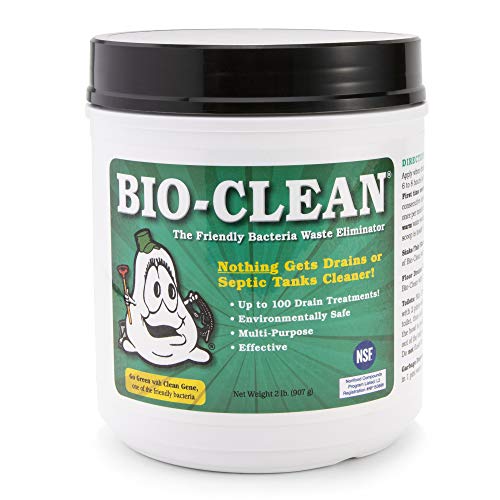
- LISTING IS FOR 1 TWO POUND CANISTER
- Special combination of natural microbes and enzymes that DIGESTS dead organic waste found in your plumbing system
- Eliminates costly backups. Up to 100 Drain Treatments.
Type: Powder
Best For: Heavy grease and sludge removal.
Key Features
- A special combination of natural microbes and enzymes that digest dead organic waste found in your plumbing system.
- Effective on grease, hair, soap scum, food particles, and more.
- Environmentally friendly and safe.
- Application: Mix 2 tablespoons of Bio-Clean with warm water and pour it into the toilet or drain, then avoid water use for 6 – 8 hours.
Pros
- Safe for all plumbing systems.
- Eco-safe with no harmful chemicals.
- Industrial-strength formula suitable for residential and commercial use.
- It can be used on various drains and septic systems.
Cons
- Requires mixing with warm water before application.
Price
It is approximately $50 for a 2-pound canister. Click here to check the latest price and details.
Quick Comparison Table – Effective Septic Tank Bacteria
Here comes a quick comparison table to help you make an informed decision.
| Product | Bacteria Type | Best For | Price |
| Rid-X Septic System Treatment | Bacteria + Enzymes | Overall septic system maintenance | Check on Amazon |
| Green Gobbler Treatment Packets | Bacteria + Enzymes | Odor control & natural waste breakdown | Check on Amazon |
| Walex Bio-Active Drop-Ins | Bacteria + Enzymes | Monthly maintenance & solid waste breakdown | Check on Amazon |
| ONE FLUSH Septic Tank Treatment | Bacteria + Enzymes | Preventing backups & odors | Check on Amazon |
| Roebic K-37-H-3 Septic Tank Treatment | ROETECH patented bacteria | Reconditioning the tank & solid breakdown | Check on Amazon |
| Septic Tank Treatment Pods | Concentrated beneficial bacteria | Preventing backups & grease breakdown | Check on Amazon |
| Bio-Clean Drain Septic Bacteria | Special microbes & enzymes | Heavy grease, sludge, and organic waste removal | Check on Amazon |
Anaerobic vs. Aerobic Bacteria: Which Is Best for Your Septic Tank?
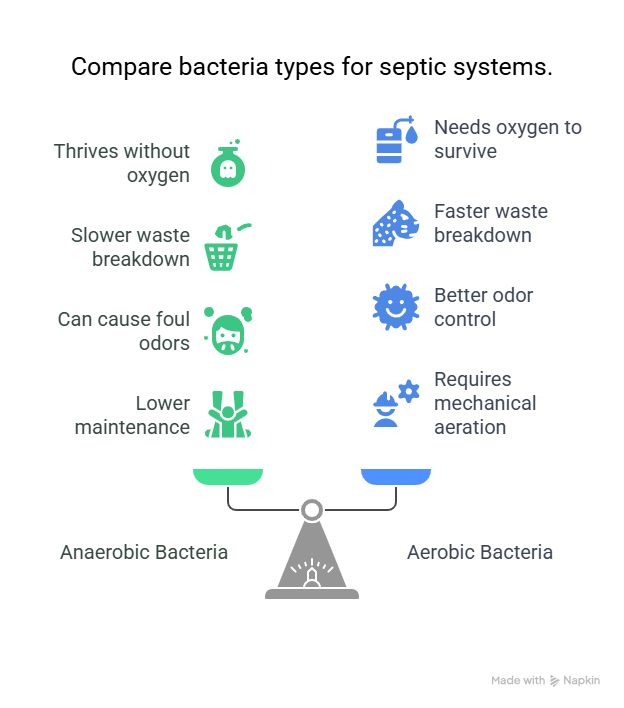
Let’s find out the difference between anaerobic bacteria for septic tanks and aerobic bacteria in the septic system.
| Feature | Anaerobic Bacteria | Aerobic Bacteria |
| Location | Inside traditional septic tanks | In aerobic treatment units (ATUs) and drain fields |
| Oxygen Requirement | Grows in no-oxygen environments | Need oxygen-rich environments |
| Waste Breakdown Speed | Slower decomposition | Faster and more thorough digestion |
| Energy Requirement | No mechanical parts needed | Requires aeration systems (electricity) |
| Odor Control | Less efficient | Better at eliminating foul smells |
| Maintenance Needs | Lower upkeep, but slower process | More maintenance, but better performance |
| Examples | Clostridium, Methanogens | Nitrosomonas, Bacillus subtilis |
Which One Should You Use?
If you have a traditional septic tank, go for anaerobic bacteria. They’re the natural choice for sealed, oxygen-free tanks and work passively to digest solids.
If your system has a drain field problem, excess sludge, or recurring odor issues, consider an aerobic treatment unit or an additive with aerobic bacteria for more aggressive treatment.
How Do I Increase Good Bacteria in Septic Tanks?
Artificial additives and harsh chemicals can throw the system off balance, but there are natural, affordable, and effective ways to boost the good bacteria.
1. Feed Septic-Safe Natural Inputs
You should use compostable kitchen scraps (like fruit peels, coffee grounds, and veggies in moderation). These give bacteria organic material to break down.
Always flush a mixture of brown sugar, yeast, and warm water down the toilet once a month. This homemade booster provides nutrients and new microbial life.
You can also add buttermilk or sour milk occasionally, as the lactic acid inside it encourages m
2. Keep the Environment Healthy
Pump your septic tank every 3 – 5 years to keep sludge levels manageable and create room for bacteria to grow.
Conserve water to avoid overburdening the system. Too much water flushes bacteria out before they can work.
Add organic enzyme + bacteria blends (like Bio-Clean or Green Gobbler) monthly if natural inputs aren’t enough.
3. Limit What You Flush
The thumb rule is to use septic-safe cleaning products only (labeled biodegradable and non-toxic).
Also, avoid antibacterial soaps, bleach, and chemical drain cleaners. They kill both bad and good microbes.
As well as please choose eco-friendly laundry detergents free of phosphates and harsh surfactants.
Mistakes That Kill Your Septic Bacteria
Here are the most common habits that harm septic bacteria and how to avoid them.
1. Dumping Grease and Cooking Oil
Fats harden and rise to the surface. Then, it blocks oxygen and disturbs the helpful bacteria. Eventually, it leads to clogs in your system.
Instead, pour grease into a container, freeze it, and toss it in the trash.
2. Pouring Bleach or Harsh Chemicals Down the Drain
Chlorine bleach, drain cleaners, and disinfectants don’t stop at killing germs on surfaces. They also destroy the essential bacteria in your septic tank.
Instead, use septic-safe cleaners like vinegar, baking soda, or enzyme-based solutions.
3. Flushing Medications, Especially Antibiotics
Meds like antibiotics kill off beneficial microbes in your tank. As a result, it slows down waste breakdown.
Instead, dispose of meds through local take-back programs or safe pharmacy drop-offs.
4. Using Antibacterial Soaps & Detergents
These products are designed to kill bacteria, which includes the ones your septic system desperately needs.
Instead, use mild, biodegradable, non-antibacterial soaps and natural cleaners.
5. Treating Your Toilet Like a Trash Can
Flushing wipes, paper towels, feminine hygiene products, and even “flushable” wipes can clog pipes and overwhelm bacteria.
Instead, only flush the 3 P’s: Pee, Poop, and (toilet) Paper.
Signs Your Septic System Needs More Bacteria
Here are the most common signs you need to watch for.
1. Slow Drains and Gurgling Toilets
If your sinks, tubs, or toilets are draining slowly or making unusual gurgling sounds, it could mean solid waste isn’t breaking down properly. It’s an early sign of bacterial imbalance.
2. Persistent Foul Odors
A healthy septic tank breaks down waste efficiently and traps odors.
When bacteria levels drop, sludge starts to build up. It leads to foul odors around drains, your yard, or the septic tank lid.
3. More Frequent Pumping Than Usual
Are you pumping your tank more often than every 3 – 5 years?
A sluggish microbial ecosystem could be the reason solids aren’t decomposing as they should.
4. Unusually Lush Grass Over the Drain Field
If your drain field looks greener than the rest of your lawn, it might be leaking partially treated waste due to sludge overload.
5. Frequent Backups or Overflows
Without enough bacteria to break down waste, your tank fills up quickly. It causes backups in your home or yard.
This is a major warning sign that your system needs urgent care.
How Often Should You Add Bacteria to a Septic Tank?
The key rule is to add bacteria once per month. It’s designed to keep the system balanced and active. Here are the factors that show how often you might need to add bacteria.
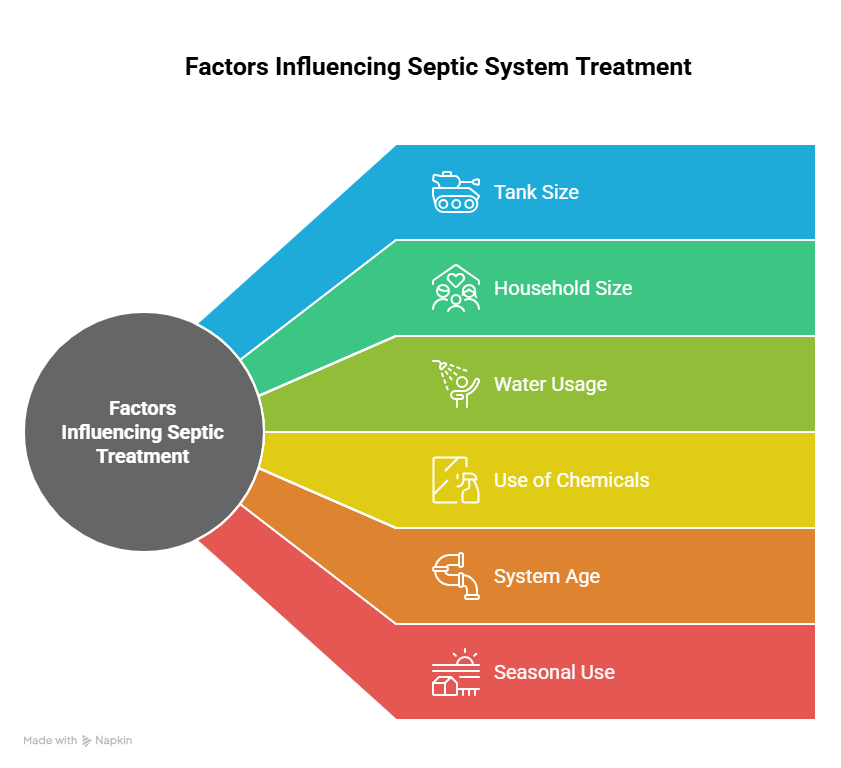
In the infographic, we can see that several factors affect how often you should add bacteria to your septic system.
Larger tanks may need more frequent dosing or a higher volume per treatment. A bigger household means more waste, so extra bacterial support might be necessary.
High water usage from long showers or frequent laundry can dilute the bacterial concentration.
If your home uses bleach, disinfectants, or antibacterial soaps, increase treatment frequency to restore balance.
Older systems or those with past issues often benefit from more regular bacterial additions.
Lastly, seasonal homes like vacation cabins may only need quarterly treatments timed with periods of use.
DIY vs. Store-Bought Bacteria: Which Works Best?
Homeowners often face the dilemma: should they opt for DIY natural methods or invest in store-bought bacterial additives?
Let’s delve into both options to help you make an informed decision.
DIY Natural Methods
These involve using household items like rotten tomatoes, yeast, or sugar mixtures to boost bacterial activity in your septic tank.
For example, adding rotten tomatoes can introduce natural enzymes that aid in breaking down solids.
This is a common practice to puree three overripe tomatoes and flush them down the toilet or garbage disposal every three months.
Store-Bought Bacterial Additives
These are commercially available products formulated with specific strains of bacteria and enzymes designed to enhance septic system performance.
Brands like Rid-X and Cabin Obsession offer treatments that claim to reduce odors, prevent clogs, and prolong the time between pump-outs.
Quick Comparison
| Aspect | DIY Natural Methods | Store-Bought Additives |
| Effectiveness | Varies | Mostly successful |
| Ease of Use | Simple, requires preparation | Convenient, ready-to-use |
| Expert Recommendation | Generally safe in moderation | Some experts advise caution or avoidance |
| Environmental Impact | Eco-friendly | Potential environmental concerns |
| Cost | Low (utilizes household items) | Moderate to High (recurring purchase) |
Both DIY natural methods and store-bought bacterial additives have their merits and drawbacks.
DIY approaches are cost-effective and environmentally friendly but may offer inconsistent results.
Store-bought additives provide convenience but come with higher costs and potential environmental concerns.
FAQs
1. Can You Add Too Much Bacteria to a Septic Tank?
While beneficial bacteria are essential for septic system function, an overabundance can disrupt the microbial balance. Especially anaerobic types may outcompete others, leading to inefficiencies in waste breakdown.
2. Do Bacteria Eliminate the Need for Pumping?
No, even with active bacterial populations, regular pumping remains crucial. Bacteria break down organic waste, but they can’t digest inorganic materials like plastics or synthetic fibers. These build up as sludge over time, and if not pumped out regularly, they can clog the system and cause serious failures.
3. Are Enzyme Treatments the Same as Bacterial Treatments?
Not exactly. Enzyme treatments contain proteins that accelerate the breakdown of organic waste, facilitating the work of bacteria. Bacterial treatments, on the other hand, introduce live microorganisms that digest waste materials. While enzymes aid the process, they don’t replace the need for a healthy bacterial population.
Bottom Line
When it comes to keeping your septic system healthy, the best bacteria for septic tanks are typically anaerobic bacteria.
These grow in low-oxygen environments and do the heavy lifting when it comes to breaking down solid waste, reducing sludge, and preventing backups.
For most households, using a high-quality bacterial treatment monthly, like Cabin Obsession Septic Treatment or EcoStrong Liquid Bacteria, can make a big difference in long-term system performance.
Harsh chemicals, antibacterial cleaners, and grease can all kill off the helpful microbes your tank depends on.
That’s why a combination of natural maintenance habits and trusted bacteria products is the smartest approach.
Flush smart, live clean!