Did you know that an alarming 50% of septic systems inspected by the EPA were found to be faulty due to poor maintenance and design?
This figure highlights a hidden crisis for rural homeowners and eco-conscious families living off the municipal grid. It can lead to foul odors, sewage backups, and costly repairs if left ignored.
That’s where the best enzymes for septic tanks come in. The natural, biological solutions that break down waste and restore balance inside your system.
Products like RID-X, which combines bacteria and enzymes for monthly waste breakdown, and Green Gobbler, an eco-friendly enzyme cleaner safe for pipes and drains, offer reliable, low-maintenance protection.
In this comprehensive guide, we’ll explore how septic tank enzyme cleaners work and why they’re essential, types of enzyme treatments, and a few recommended products.
By the end, you’ll have everything you need to make informed decisions that can protect your home, your health, and the environment.
Therefore, let’s get started!
What Are Enzymes for Septic Tanks?
Enzymes for septic tanks are biological catalysts.
The natural proteins that break down waste like fats, oils, grease, paper, and organic solids inside your septic tank are known as Enzymes. These enzymes are produced by beneficial bacteria naturally present in the septic system.
Think of them as microscopic scissors that slice complex waste into smaller, digestible bits that bacteria can then consume and process more efficiently.
They are not alive (unlike bacteria), but they speed up decomposition and help your septic system stay unclogged and odor-free.
Types of Enzymes Used in Septic Systems
Here’s a breakdown of the primary enzymes utilized in septic systems,
1. Protease – Protein Degrader
Function: Breaks down protein-based waste such as fecal matter, food particles, and other organic proteins
Benefit: Reduces sludge accumulation and prevents clogs caused by protein-rich waste.
Source: Commonly found in products like RID-X and other septic treatments.
2. Amylase – Starch Converter
Function: Decomposes starches found in foods like rice, pasta, and bread into sugars.
Benefit: Aids in the breakdown of carbohydrate-rich waste and enhances bacterial digestion.
Source: Present in various enzyme-based septic treatments.
3. Lipase – Fat and Grease Breaker
Function: Targets fats, oils, and grease (FOG), decomposing them into simpler substances.
Benefit: Prevents the formation of scum layers and clogs in the drainage field.
Source: Included in treatments like Green Gobbler Enzyme Drain Cleaner.
4. Urease – Urea Processor
Function: Converts urea, a component of urine, into ammonia and carbon dioxide.
Benefit: Facilitates the nitrogen cycle within the septic system, promoting microbial activity.
Source: Included in specialized enzyme treatments for septic systems.
5. Cellulase – Fiber and Paper Decomposer
Function: Breaks down cellulose, the primary component of paper products and plant fibers.
Benefit: Ensures efficient degradation of toilet paper and other fibrous materials, preventing blockages.
Source: Found in products like RID-X and other comprehensive septic treatments.
6. Xylanase – Plant Material Breaker
Function: Degrades xylan, a component of plant cell walls. It aids in the breakdown of plant-based waste.
Benefit: Enhances the decomposition of vegetable matter and other plant-derived materials.
Source: Found in advanced enzyme formulations for septic maintenance.
Best Enzymes for Septic Tanks in 2025
To save you time, we’ve handpicked the best enzymes for septic tanks in 2025, based on effectiveness, user reviews, safety, and real results.
Below are top-rated solutions trusted by homeowners and eco-conscious users alike.
1. RID-X Septic Tank Treatment Enzymes

- Helps prevent septic back-up.
- Advanced enzymes immediately start to break down household waste.
- Patented natural active septic bacteria to help reduce tank build-up.
Best For: Homeowners who need a reliable, long-term septic maintenance solution.
Key Features
- Combines natural bacteria and advanced enzymes to break down household waste.
- Helps maintain a free-flowing septic system & prevent expensive septic tank back-up problems.
- Safe for all pipes and septic tanks.
- Provides an 8-month supply.
- Application: Pour 9.8oz of powder down the toilet and flush once a month.
Pros
- Simple application process.
- Trusted brand with a long-standing reputation.
- Effective in preventing septic backups.
Cons
- Powder form may require careful handling to avoid spills.
Price
It is approximately $55 for an 8-dose powder pack. You can click here to check the other details.
2. Green Gobbler Septic Saver Pods

- 7-IN-1 SEPTIC WASTE DIGESTION: Green Gobbler Septic Saver Pods use a powerful probiotic formula to break down the most c…
- DROP A POD TO HELP PREVENT BACKUPS & OVERFLOWS: Protect your septic tank with Green Gobbler Septic Saver. Simply drop a …
- AVOID COSTLY SEPTIC REPAIRS: Flushing one pod a month with occasional tank pumping can help you avoid expensive septic t…
Best For: Users who need an eco-friendly and hassle-free septic treatment option.
Key Features
- 7-in-1 septic waste digestion formula.
- Breaks down toilet paper, fats, oils, grease, proteins, sugars, and starches.
- It can also be used to treat cesspools, RV & marine holding tanks, and drain & leach fields.
- Application: Simply drop a pod into your main floor toilet once a month and flush. It’s that easy.
Pros
- Eco-friendly probiotic formula.
- Versatile use across various systems.
- Convenient and mess-free application.
Cons
- Pods may not dissolve completely in low-flow toilets
Price
It is approximately $16 for a 6-month supply. You can click here to check the other details.
3. Bio-Clean Drain Septic Bacteria
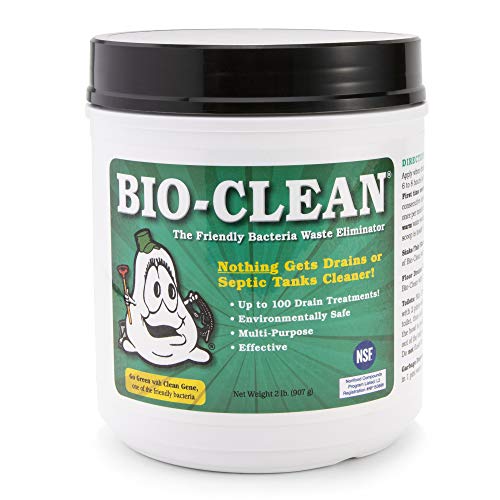
- LISTING IS FOR 1 TWO POUND CANISTER
- Special combination of natural microbes and enzymes that DIGESTS dead organic waste found in your plumbing system
- Eliminates costly backups. Up to 100 Drain Treatments.
Best For: Users who need a powerful, eco-friendly solution for severe clogs and maintenance.
Key Features
- A special combination of natural microbes and enzymes that digest dead organic waste found in your plumbing system.
- Effective on grease, hair, soap scum, food particles, and more.
- Environmentally friendly and safe.
- Application: Mix 2 tablespoons of Bio-Clean with warm water and pour it into the toilet or drain, then avoid water use for 6 – 8 hours.
Pros
- Safe for all plumbing systems.
- Eco-safe with no harmful chemicals.
- Industrial-strength formula suitable for residential and commercial use.
- It can be used on various drains and septic systems.
Cons
- Requires mixing with warm water before application.
Price
It is approximately $50 for a 2-pound canister. You can click here to check the other details.
4. Cabin Obsession Septic Tank Treatment

- 🌿 YOU’RE JUST ONE FLUSH AWAY FROM A HEALTHY SEPTIC SYSTEM! Our monthly easy flush dissolving packets are specially formu…
- 🌿 SCIENTIFICALLY SELECTED BACTERIA CULTURES. Each packet contains billions of active bacteria cultures that are scientif…
- 🌿 ALL NATURAL, ENVIRONMENTALLY FRIENDLY, & MADE IN THE USA. Each flushable septic treatment packet is all natural, with …
Best For: Homeowners in rural areas seeking consistent septic maintenance.
Key Features
- 100% natural and safe for all systems.
- 52 weekly septic tank treatment fizz tablets.
- Easy flush bio toilet tabs with billions of active bacteria per tablet.
- Application: Drop one packet into the toilet and flush once per month. It dissolves and gets to work instantly.
Pros
- Ideal for rural homes and cabins.
- Eco-safe with no harmful chemicals.
- Long-lasting 1-year supply.
- Convenient weekly treatment schedule.
Cons
- Weekly application may be more frequent than some users prefer.
Price
It is approximately $25 for a 12-month supply. You can click here to check the other details.
5. Walex Bio-Active Septic Tank Treatment

- POWERFUL DIGESTIVE POWER – Bio-Active Septic Tank Treatment contains beneficial septic enzymes that efficiently liquefy …
- PORTION CONTROL – With just one Bio-Active septic tank cleaner packet per month, your septic system thrives. Billions of…
- PLUMBING SAFE – Bio-Active septic tank pods tackle household waste buildup. Say goodbye to damage from household cleaner…
Best For: RV owners and homeowners who need a straightforward septic treatment solution.
Key Features
- Strong digestive power with beneficial bacteria and enzymes.
- Odor neutralizer; formaldehyde-free and non-staining.
- It offers safety for septic tanks and plumbing systems.
- Liquefies solids and breaks down waste.
- With just one Bio-Active septic tank cleaner packet per month, your septic system stays healthy.
- Application: Toss one packet into the toilet and flush, whether at home or in an RV. Use monthly for best results.
Pros
- Safe for all plumbing systems.
- Suitable for both RV and home use.
- Easy monthly drop-in packets.
Cons
- It may not be as potent for heavily used systems.
Price
It is approximately $15 for 12 packets (1-year supply). You can click here to check the other details.
6. ONE FLUSH Septic Tank Treatment Packets

- ONE FLUSH septic tank treatment packets contain 56 billion beneficial bacteria that digest grease, fats, oils, paper, an…
- ONE FLUSH septic treatment packets are made in the USA. All natural, environmentally friendly. Each monthly pack of ONE …
- ONE FLUSH septic treatment packets are your first step to make sure that you never have septic problems again. Protect y…
Best For: Homeowners who need an easy-to-use, eco-friendly, and effective septic system maintenance solution.
Key Features
- Contains bio-genetically developed bacteria that safely digest fats, oils, and organic matter without harsh chemicals.
- Originally crafted for municipal waste treatment.
- Comes with 12 dissolvable packets, each formulated for monthly application.
- Suitable for septic tanks, greywater systems, cesspools, grease traps, lagoons, and even RVs and boats.
- Application: Simply drop one packet into the toilet each month and flush.
Pros
- Cost-effective solution.
- Environmentally friendly and safe for all plumbing systems.
- Easy monthly drop-in packets.
Cons
- Requires a monthly application.
Price
It is approximately $18.95 for a 1-year supply. You can click here to check the other details.
Quick Comparison Table – Effective Septic Tank Enzymes
Here comes a quick comparison table to help you make an informed decision.
| Product | Enzyme Type | Best For | Price |
| RID-X Septic Treatment | Enzyme + Bacteria | General household use | Check on Amazon |
| Green Gobbler Septic Saver | Enzyme-Based | Eco-conscious homes | Check on Amazon |
| Bio-Clean | Enzyme+Bacteria | Large systems or high-usage homes | Check on Amazon |
| Cabin Obsession Septic Treatment | Bio-Enzyme | Cabins, off-grid homes | Check on Amazon |
| Walex Bio-Active | Enzyme + Bacteria | RVs and small tanks | Check on Amazon |
| ONE FLUSH Septic Treatment | Bacteria + Enzymes | Long-term residential use | Check on Amazon |
How Enzymes Work in Your Septic Tank? (Step-by-Step)
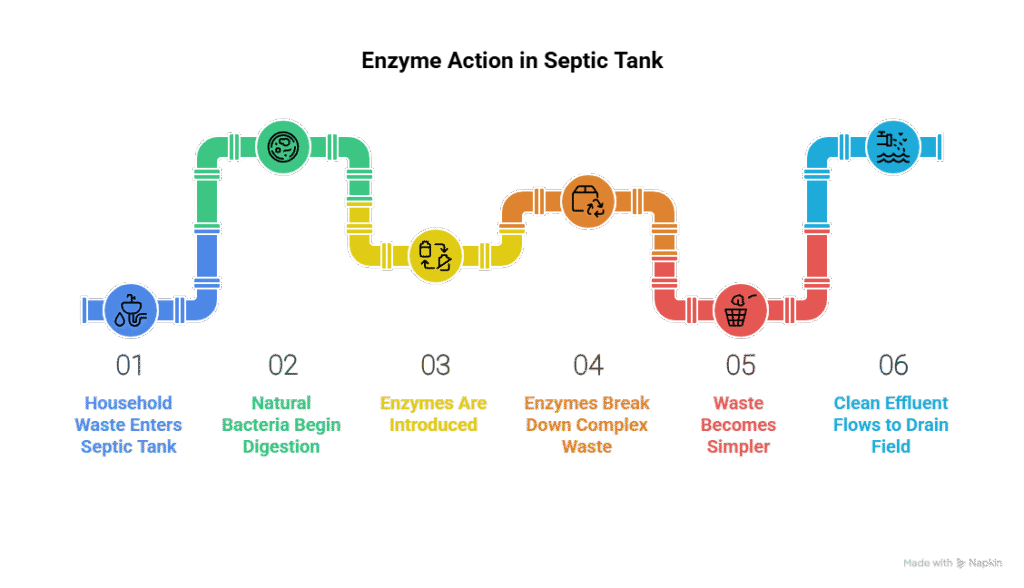
Septic systems rely on a delicate balance of bacteria and enzymes to efficiently break down household waste. Here are the steps of how it works.
Step 1: Household Waste Enters the Septic Tank
Everything from your sinks, toilets, and laundry flows into the septic tank. It brings in organic matter, such as grease, food particles, human waste, and paper products.
Step 2: Natural Bacteria Begin to Digest Waste
Naturally occurring anaerobic bacteria in the tank begin breaking down the waste, but this process is often slow and uneven, especially when modern household chemicals are present.
Step 3: Enzymes Are Introduced (Via Treatments or Bacterial Action)
Enzymes either occur naturally through bacterial action or are added via enzyme-based septic tank treatments. These enzymes act as catalysts.
Step 4: Enzymes Break Down Complex Waste
Each type of enzyme targets specific compounds:
- Protease: Breaks down proteins into amino acids
- Lipase: Breaks down fats and oils
- Amylase: Breaks down starches into sugars
- Cellulase: Breaks down toilet paper and plant fibers
- Urease: Breaks down urea in urine
- Xylanase: Breaks down plant-based debris
Step 5: Waste Becomes Simpler & Easier to Digest
These simplified particles are much easier for bacteria to consume and process. This keeps sludge levels low and prevents clogs or backups.
Step 6: Clean Effluent Flows to the Drain Field
The processed wastewater is called effluent. It flows out of the tank into the drain field, where it undergoes final filtration through the soil.
How to Use Septic Tank Enzymes Properly?
Proper enzyme usage keeps your septic system healthy, odor-free, and clog-resistant. Follow this routine to get the best results.
1. Choose the Right Frequency
Monthly use is best for most households, especially those with 2+ people or high water usage. Vacation homes / seasonal use every 2 – 3 months is sufficient.
Post-antibiotics or heavy chemical use, apply enzymes immediately to rebalance bacteria.
2. Know Where to Add the Enzymes
The best method is to drop the treatment into the toilet bowl and flush. You can also pour directly into the septic tank opening if accessible.
Avoid pouring into sinks, drain fields, or showers. It’s not only ineffective but also wasteful.
Add enzymes at night when water usage is lowest for best activation.
3. Do’s and Don’ts of Enzyme Treatment
| Do’s | Don’ts |
| Use enzymes once a month | Don’t flush bleach or harsh chemicals |
| Keep them in a cool, dry spot | Don’t overuse; too much can harm the system |
| Flush after adding them | Don’t use enzymes for big clogs |
| Pick eco-friendly septic products | Don’t mix enzymes with other cleaners |
4. Safety Tips & Storage
- Wear gloves when handling powders or concentrated liquids.
- Use before the expiration date, as the enzymes lose potency over time.
- Keep products away from kids and pets, even if non-toxic.
- Clean up spills with plain water; avoid inhaling powder dust.
For maximum efficiency, avoid flushing non-biodegradable items like wipes, sanitary pads, or synthetic cleaners that kill beneficial bacteria.
How Do Enzymes Differ from Septic Chemical Additives?
Many homeowners mistakenly believe all septic treatments are the same. But enzymes and chemical additives work very differently.
| Feature | Enzymes | Chemical Additives |
| Origin | Natural (proteins) | Synthetic (acids, alkalis, solvents) |
| Function | Break down organic waste | Kill pathogens or dissolve blockages |
| Septic-Safe? | Yes, supports bacteria | Often harmful, may kill good bacteria |
| Eco-Friendliness | High, biodegradable | Low, can harm groundwater or soil |
Enzymes assist your septic tank’s natural ecosystem. Chemicals often disrupt it.
Enzymes vs. Bacteria: What’s the Real Difference?
Understanding the roles of enzymes and bacteria is crucial for effective septic system maintenance.
Enzymes
Enzymes are non-living proteins that help break down complex waste into simpler parts. They start the process but don’t eat the waste themselves.
Bacteria
These are living microbes that eat and digest the simple waste broken down by enzymes. They multiply and keep the breakdown process going over time.
In short
- Enzymes = Prep the meal
- Bacteria = Eat the meal
That’s why top products like RID-X contain both enzymes and bacteria, working together to maintain a healthy, flowing system.
Factors to Consider When Choosing Septic Enzymes
To choose the best one for your home and needs, here are the top factors you must evaluate before purchasing.
1. Septic Tank Size
Larger tanks need stronger or higher doses of enzymes. So, check your product’s label.
Some treatments cover up to 1,500 gallons, while others are designed for small systems or RV tanks.
2. Frequency of Use
For regular households, monthly treatments are often sufficient.
However, homes with heavier water usage, multiple bathrooms, or chemical-intensive routines (like using bleach or antibacterial cleaners) may benefit from more frequent applications.
On the other hand, if your property is a vacation home or seasonal cabin, quarterly treatments may be enough to maintain functionality.
3. Eco-Friendliness
Choose brands labeled eco-safe, septic-safe, or plant-based. Some products are also safe for gray water reuse and won’t harm wildlife.
Enzymes should support the environment, not pollute it.
4. Ingredients (Biodegradable & Non-Toxic)
Look for biodegradable enzyme formulas that are safe for plumbing and groundwater. Always avoid harsh chemical additives that kill helpful bacteria.
Choose products with natural enzymes and added bacterial cultures for optimal breakdown of waste.
5. Certifications (NSF, EPA-Safe, etc.)
Look for,
- NSF (National Sanitation Foundation)
- Safer Choice or Green Seal labeled
- Made in the USA or USDA BioPreferred (for U.S. readers)
These marks assure quality, safety, and environmental compliance.
6. Form: Powder, Liquid, or Tablet?
- Powder is fast-acting and adjustable, ideal for large tanks or pros.
- Liquid is easy to use and quick, great for regular home use.
- Tablet/Pod is pre-measured and mess-free, perfect for beginners or busy homes.
DIY Septic Enzyme Alternatives – Do They Work?
The idea of using pantry staples like yogurt, yeast, or baking soda to support your septic system is gaining attention. Let’s break it down.
Common Household “Enzyme” Sources
Many DIY enthusiasts recommend the following as natural enzyme boosters.
Baking Soda + Vinegar
Popular for unclogging drains, but it doesn’t break down organic matter in your septic tank. It works more like a cleaning solution than an enzyme source.
Yeast
Contains fungi that produce enzymes like amylase, which can help digest starches. However, yeast isn’t balanced or targeted for septic environments.
Yogurt & Buttermilk
These contain live probiotics, which may offer some benefit. But the bacteria are designed for digestion, not septic waste breakdown.
Henceforth, while these ingredients may introduce some helpful microbes, their effects are limited and unpredictable.
Why Store-Bought Enzyme Treatments Are More Reliable?
Unlike homemade concoctions, commercial enzyme products are,
Scientifically formulated
Contain targeted enzyme blends like protease, amylase, lipase, and cellulase for maximum waste breakdown.
Concentrated and measured
DIY methods lack potency and consistency.
Tested for efficiency
Designed to survive in the harsh environment of a septic tank.
For example, a monthly dose of Bio-Clean or Green Gobbler delivers billions of live bacteria and specific enzymes in a stable, measured form.
This is something no DIY method can replicate.
When DIY Might Be Okay And When It’s Risky?
- Okay for occasional drain cleaning
- Risky for full-system treatment
- Never flush raw meat, grease, or sugary fermentables (like beer) into the system.
Common Septic Maintenance Mistakes to Avoid
Even well-meaning homeowners can unknowingly harm their septic systems by making a few critical mistakes. Avoiding these is key to extending your system’s lifespan.
1. Mixing Harsh Chemicals with Enzymes
Combining enzyme treatments with chemical cleaners (like drain openers, disinfectants, or bleach) can kill the beneficial bacteria and enzymes in your system.
This reduces the effectiveness of both natural and added biological treatments.
Avoid using chlorine bleach, ammonia, or antibacterial cleaners regularly. Go for septic-safe or enzyme-compatible products.
2. Overusing or Underusing Enzyme Treatments
Too much enzyme product can disrupt the natural balance of bacteria and may lead to unexpected sludge accumulation or inefficiency.
Also, too little, and your system may not get enough microbial activity to break down waste effectively.
Always follow the product’s recommended monthly dosage based on tank size and household use.
3. Overuse of Antibacterial Soaps and Bleach
Daily use of antibacterial hand soaps, laundry products, or disinfecting wipes can gradually sterilize your septic tank.
This diminishes the population of natural bacteria and inhibits the decomposition of solids.
Switch to biodegradable, eco-friendly, and septic-safe personal care and cleaning products whenever possible.
4. Ignoring Your Pump-Out Schedule
Even the best enzyme treatments can’t fully digest every solid. Over time, a septic tank must be pumped to remove undigested sludge.
Most tanks need professional cleaning every 3 – 5 years, depending on household size and water usage. Delaying pumping can lead to backups, clogged drain fields, and system failure.
Keep a maintenance log and schedule inspections/pumping with a licensed septic provider.
Top 5 Maintenance Tips for a Healthy Septic System
Here are the top five expert-recommended tips to keep your system running smoothly.
1. Avoid Harsh Chemicals and Cleaners
Household cleaners like bleach, ammonia, and drain openers can kill the beneficial bacteria and enzymes essential to breaking down waste.
Instead, choose enzyme-safe, biodegradable cleaning products and avoid pouring paints, solvents, or medications down the drain.
2. Conserve Water to Prevent Overload
Using too much water in a short period can overwhelm your septic tank and drain field.
Spread out laundry loads, fix leaks promptly, and consider water-efficient fixtures to reduce overall water usage.
Less water means more time for solids to settle and be broken down naturally.
3. Schedule Inspections Every 3 – 5 Years
Even with regular enzyme use, solids will eventually accumulate. Have your septic tank professionally inspected every 3 to 5 years and pumped as needed.
Routine checks can detect early warning signs like slow drainage, standing water, or foul odors.
4. Watch What Goes Down the Drain
Never flush wipes, diapers, feminine hygiene products, coffee grounds, or grease.
These items don’t break down easily and can clog pipes or fill up your tank quickly.
Stick to flushing only waste and toilet paper, and compost or trash everything else.
5. Regularly Add Enzymes or Biological Treatments
Monthly use of septic tank enzyme treatments (like RID-X or Green Gobbler) helps break down proteins, fats, and cellulose.
These products replenish natural bacteria and keep your system functioning efficiently, especially useful for households using antibacterial soaps or cleaners.
FAQs
1. How often should I add enzymes to my septic tank?
Most enzyme-based septic tank treatments are designed for monthly use. However, usage can vary based on household size, water usage, and tank size. Always follow the manufacturer’s instructions for best results.
2. Are enzymes safe for the environment?
Yes. Enzymes are biodegradable, non-toxic proteins that support natural waste breakdown. Unlike chemical additives, they do not harm groundwater, soil, or beneficial bacteria in your septic system.
3. Do enzyme treatments eliminate the need for pumping?
No. Enzyme treatments help reduce sludge buildup, but they don’t eliminate solids. Your tank will still need to be pumped every 3 – 5 years, depending on usage. Enzymes delay the need, not replace it.
4. Can enzymes fix a clogged septic system?
Not always. Enzymes can help prevent future clogs by breaking down organic matter, but they’re not a quick fix for serious blockages or backup issues. For active clogs, it’s best to consult a septic professional for mechanical cleaning or pumping first.
5. What are the signs you need enzyme treatment?
Look for these early signs that your septic system may benefit from enzyme supplements:
- Slow drains or gurgling pipes
- Mild sewage odor around your yard or toilets
- Grease or scum buildup in sinks
- You regularly use antibacterial soaps or bleach
- It’s been months since your last biological treatment
Final Analysis
Septic tank enzyme treatments offer a natural, effective way to keep your system running smoothly by breaking down organic waste. It restores bacterial balance and prevents clogs or backups.
As we’ve explored, the best enzymes for septic tanks include RID-X, a trusted monthly enzyme and bacteria blend; Green Gobbler, known for its eco-friendly drop-in pods.
Then we also have the Bio-Clean, a powerful industrial-grade formula; Cabin Obsession, ideal for rural households; Walex Bio-Active, great for RV and home use; and ONE FLUSH, a year-long USA-made treatment for proactive care.
Using these products consistently ensures your septic system functions optimally with minimal maintenance. Regular enzyme use is a simple, affordable habit that pays off long term.
Flush smart, live clean!