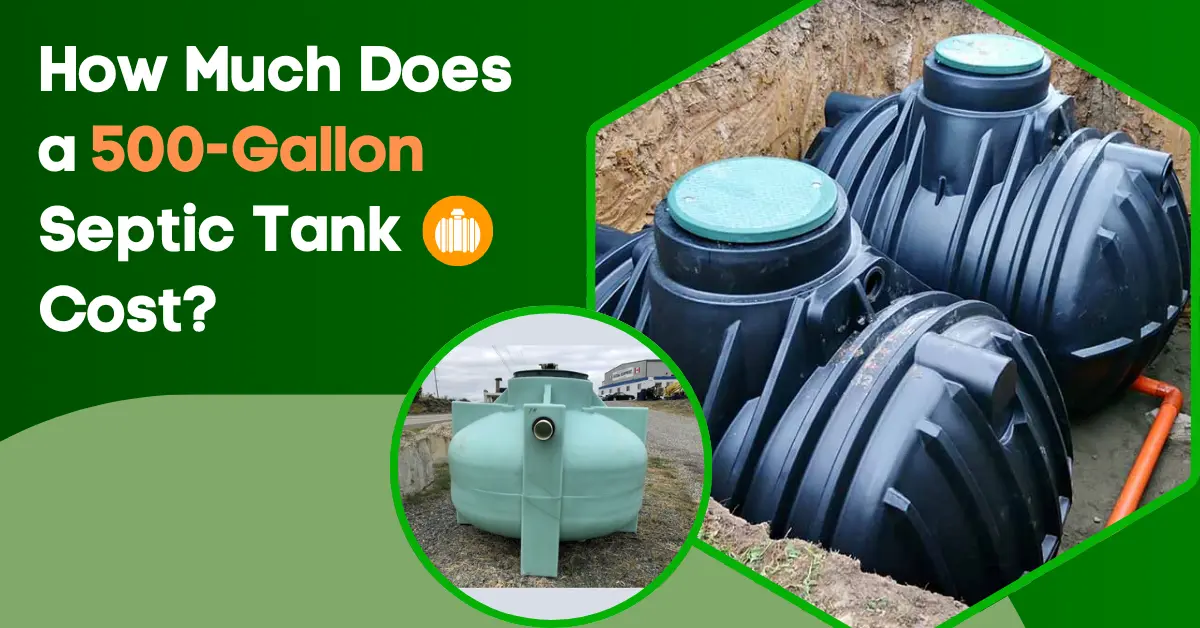
You can find a 500-gallon septic tank online for $599. Is that a great deal?
But what about permits, soil testing, site prep, drain field installation, and labor? Suddenly, that simple tank becomes part of a $6,000 – $12,000 investment.
For affordable wastewater solutions for small homes with 1-2 people, cabins, or off-grid living, a 500-gallon septic tank is often the preferred choice.
Hence, understanding the 500 gallon septic tank cost is crucial. Buyers often overlook key cost components like installation fees, material differences, and even local code compliance.
In this comprehensive guide, you’ll see tank-only prices by material and compare brands. In addition, hidden costs like permits and long-term maintenance.
Therefore, let’s get started!
How Much Does a 500-Gallon Septic Tank Cost in 2025?
The true cost of owning a septic system depends on much more than the sticker price.
From materials and brand to permits and installation, here’s what you need to know before you buy.
Price Range (Tank Only): $500 – $2,000
| Material | Price Range | Notes |
| Plastic | $500 – $2,000 | Standard tanks |
| Concrete | $700 – $2,000 | For heavy-duty |
| Fiberglass | $1,200 – $2,000 | Durable and lightweight |
Full System Installation (Tank + Site Work): $4,000 – $12,000
- Conventional systems: $3,500 – $8,500
- Alternative or engineered systems (aerobic, mound, sand filter): $7,000 – $20,000
500 Gallon Septic Tank Price – Material Type
Here’s a comparison of various types suited for a 500-gallon tank in 2025.
1. Plastic / Polyethylene
Price Range: $650 – $2,000
Key Characteristics
- Lightweight and easy to handle
- Ideal for off-grid, rural, or seasonal properties
- Non-corrosive and widely approved
Pros
- Affordable
- Simple DIY-friendly installation
- No rust or corrosion issues
- Widely available
Cons
- Can shift or float without proper anchoring
- Less durable in rocky areas
2. Fiberglass
Price Range: $1,200 – $2,000
Key Characteristics
- Mid-range cost option
- Strong, seamless construction
- Resistant to corrosion
Pros
- Long lifespan
- Low maintenance
- Lightweight but structurally strong
- Does not rust or deteriorate easily
Cons
- More expensive than plastic
- Fragile under extreme external pressure
3. Concrete
Price Range: $700 – $2,000
Key Characteristics
- Heavy-duty material
- Best suited for permanent residences and heavy soil areas
- Extremely strong and long-lasting
Pros
- 40+ year lifespan
- Highly stable, won’t shift or float
- Approved in nearly all municipalities
Cons
- High installation and transportation costs
- Requires machinery to install
- Can crack if the ground shifts or tree roots interfere
4. Steel
Price Range: $1,000 – $1,250
Key Characteristics
- Compact and structurally strong
- Mostly used in older systems
- Corrosion over time
Pros
- Strong and compact
- Can handle high pressure
Cons
- Not approved in many jurisdictions
- Shorter lifespan (15 – 20 years)
- May need early replacement
- Corrosive in nature
500 Gallon Septic Tank Cost – Installation
Below is a detailed breakdown of all associated costs to help you budget accurately.
Total Cost Overview
| Cost Category | Estimated Cost Range |
| Tank Installation | $2,000 – $3,000 |
| Drain Field | $5,000 – $15,000+ |
| Permits, Testing, Inspections | $300 – $1,000+ |
| Labor, Machinery, Site Prep | 50% – 70% of the total cost |
| Total Project Cost | $7,300 – $19,000+ |
Breakdown of Major Installation Elements
1. Tank Installation
Tank placement and hookup typically cost $2,000 to $3,000, based on soil type, labor rates, and local accessibility. This includes:
- Excavation and backfilling
- Leveling and placement
- Tank connections (inlet/outlet)
- Basic plumbing
Excavation charges often range from $100 – $300/hour based on terrain and machinery.
2. Drain Field or Leach System
This is usually the most expensive part of the installation. Costs vary greatly based on:
- Soil percolation results
- System type (gravity-fed, pressure-based, mound, aerobic, etc.)
- Trenching length and material costs
| System Type | Typical Cost Range |
| Anaerobic Gravity (basic) | $5,000 – $8,000 |
| Mound/aerobic | $12,000 – $15,000+ |
| Chambered/drip | $8,000 – $12,000 |
| Sand filter | $7,000 – $18,000 |
3. Permits, Inspections & Site Testing
| Item | Estimated Cost |
| Perc test (soil test) | $250 – $2,000 |
| Local inspections | $300 – $1,000 |
| Septic permit fees | $200 – $1,500+ |
| Additional site costs | $500 – $2,500 |
Top 3 Best 500 Gallon Septic Tanks to Buy in 2025

Below are the top 3 industry-recommended models in 2025. These are known for their quality construction, hassle-free installation, and long-term reliability.
1. Norwesco 500‑Gallon Low‑Profile Septic Tank
Price: $900 + shipping
Key Features
- Seamless poly build (FDA/NSF-61 approved).
- Low-profile: 97″ × 48″ × 42″, fits under 6 – 36″ covers.
- One 20″ gasketed lid, no special prep needed.
- Lightweight (~179 lb) for easy manual setup.
- 3 – 5 year limited warranty included.
- Cost-effective
- Widely available
- Extremely durable and leak-resistant
- Reduced installation complexity
Cons
- Not pre-plumbed, additional plumbing required
- Limited lid access
Why it’s a top pick
Norwesco tanks are rotationally molded into one seamless piece. As a result, it creates a watertight and durable unit.
The ribbed, low-profile design offers excellent structural strength and resists corrosion from soil and sewage. In addition, it’s also backed by FDA approval for wastewater storage.
2. Snyder Industries 500‑Gallon Low‑Profile Tank
Key Features
- Size: 97″ × 48″ × 42″; weight around 189 lb
- High-density polyethylene (HDPE), rotationally molded
- Inlet/outlet tees and gaskets are pre-installed for easy hookup
- One 20″ gasketed manway, no need for backfill or water-fill
- 3‑year warranty
Pros
- Compact, low-profile footprint
- Saves time/cost on plumbing connections
- Durable, chemical-resistant HDPE
Cons
- No formal IAPMO certification
- Slightly higher price point
Why It’s a Strong Candidate
Snyder Industries boasts high-density linear polyethylene (HDLPE) construction with seamless rotational molding. That’s why it’s structurally strong and resistant to cracking.
The pre-plumbed feature saves valuable installation time and ensures precise inlet/outlet placements.
It’s ideal for buyers looking for both convenience and quality.
3. AK Industries 500‑Gallon Pre‑Plumbed Tank
Key Features
- Built with heavy-duty polyethylene
- Comes pre-plumbed with 20″ and 10″ lids
- Dimensions: 90.5″ × 69″ × 46″; weighs around 210 lb
- Certified by IAPMO and CSA
- Backed by a limited-lifetime manufacturer’s warranty
Pros
- Pre-plumbed
- Code-compliant
- Heavy-duty design
Cons
- Slightly heavier
Why it’s a strong candidate
This pre-plumbed tank is IAPMO and CSA certified, which means it’s crafted and tested to meet national plumbing standards.
It’s ready-to-install, reducing both labor costs and setup time.
500 Gallon Septic Tank vs. Other Sizes: Which One Do You Need?
Here’s how a 500-gallon septic tank compares to larger sizes and how to decide what’s right for your property.
Size Comparison Chart
| Tank Size | Bedrooms | Ideal For | Average Cost |
| 500 Gallons | 1 | Cabins, ADUs, tiny homes | $500 – $900 |
| 750 Gallons | Up to 2 | Small homes, mobile homes | $700 – $1,200 |
| 1,000 Gallons | 3 – 4 | Standard family homes | $900 – $1,500 |
| 1,200 Gallons | 5 – 6 | Large households, multi-bath homes | $1,200 – $1,600 |
| 1,500 Gallons | 6 – 7 | Multi-family homes, rural estates | $1,500 – $2,500 |
When Is a 500-Gallon Septic Tank Enough?
A 500-gallon tank is a smart, affordable solution if,
- You own a seasonal cabin, a tiny house, or an off-grid home.
- The home has 1 bathroom or fewer.
- You use low-flow appliances and water-saving fixtures.
- You produce minimal wastewater, usually under 300 gallons per day.
If these conditions apply, a 500-gallon system could meet your needs with minimal pumping (once every 2 – 3 years).
What Happens If You Undersize Your Septic Tank?
Undersizing your septic tank can cause a host of serious problems.
A tank that’s too small for your household’s needs may overflow or back up into your home, especially during peak usage.
Because it fills up more quickly, solids may pass into the drain field.
This leads to more frequent pump-outs, sometimes every 6 to 12 months, and increases the risk of contaminating nearby groundwater.
In some areas, such issues can also result in fines or violations from local health authorities.
According to EPA guidelines and multiple state codes, undersized tanks are a leading cause of septic system failure and violate permitting standards.
What Affects 500-Gallon Septic Tank Prices?

If you’re exploring options for larger households, you may want to compare the 2000 gallon septic tank cost as well, especially for rural or multi-dwelling properties requiring extended capacity.
1. Tank Material
Plastic (polyethylene) tanks are typically the most affordable and lightweight. They’re easy to transport and install, though they may require anchoring to prevent shifting.
Concrete tanks are the most durable and long-lasting, but they’re heavy, need a crane, and require skilled labor for installation.
Fiberglass tanks offer a rust-free, lightweight option. They’re more expensive than plastic but easier to handle than concrete.
2. Tank Features & Certification
Tanks with dual compartments, pre-installed baffles, or IAPMO certifications might cost more upfront.
However, it can save you time and money on inspections and maintenance later.
3. Brand Reputation
Trusted manufacturers like Norwesco, Shea Concrete, AK Industries, or Ticonderoga often charge more.
Nevertheless, they usually back their products with solid warranties and consistent quality.
4. Geographic Location
Your location significantly affects the total installation cost. Permit fees, labor rates, and even soil type can all vary by region.
For example, rocky or sandy soil may require extra preparation, increasing costs.
5. System Type
Lastly, consider the system type. You’re not just paying for the tank. Conventional septic systems typically cost between $3,500 and $8,500 installed.
But if your land needs a mound or aerobic system due to poor soil absorption or elevation, expect to pay $7,000 to $20,000 or more.
Always factor in your property’s percolation rate, elevation, and local building codes when budgeting.
Permits, Codes & Compliance: What You Need to Know
Every state and often every county has its requirements. Ignoring them can result in legal headaches, fines, or even forced removal of the system.
Local Requirements & Permits
You’ll always need a septic permit from your county or municipal environmental or health department before installation.
This involves submitting a system design, which must be approved based on soil percolation tests and property layout.
According to the U.S. Environmental Protection Agency (EPA), local permitting ensures the system protects groundwater and nearby ecosystems.
The Approval & Inspection Process
Once the permit is issued, you’ll often need to schedule one or more inspections, both during and after installation. Inspectors check for:
- Proper tank placement (minimum distance from wells, homes, and property lines)
- Drain field construction and slope
- Water-tight seals and correct venting
According to a 2022 report by the National Onsite Wastewater Recycling Association (NOWRA), inspection non-compliance is one of the top causes of premature septic system failures.
Certification & Compliance Tips
To ensure your septic system passes inspection without a hitch, start by choosing a tank that’s certified by organizations like IAPMO or NSF.
These certifications confirm that the tank meets recognized industry standards for quality and safety.
It’s also wise to keep a dedicated file with all relevant documents, such as soil test results, system layout diagrams, and copies of your installer’s license, readily available for the inspector.
Having your installer present during the inspection can be a big help, too. They can answer technical questions on the spot and address any concerns the inspector may raise.
In some states, like California and Massachusetts, septic systems are even subject to mandatory maintenance schedules or registration systems that track performance over time.
Environmental Impact & Regulation
Septic systems must be placed and sized to avoid groundwater pollution.
If the water table is high or the soil has poor absorption, you may be legally required to install a mound or aerobic system instead of a traditional anaerobic one.
According to a University of Minnesota Water Resources Center study, improperly maintained systems are a leading cause of rural water contamination.
In many areas, failure to comply with environmental codes can lead to civil penalties or required system upgrades, costing $10,000+.
Maintenance and Pumping Costs
A neglected system can back up, fail inspection, or even pollute local groundwater.
When Should You Pump a 500-Gallon Tank?
For a 500-gallon septic tank, pumping is recommended every 2 to 3 years, based on the household usage.
If you’re using the tank in a single-bedroom home, tiny house, or weekend cabin, you may get by with longer intervals.
However, frequent guests or the use of a garbage disposal can accelerate the buildup and require more frequent pumping.
Rule of thumb: If solids reach 30% of the tank’s volume, it’s time to pump.
Average Pumping Cost
The average cost to pump a 500-gallon tank ranges from $250 to $600, based on your location, access difficulty, and service provider.
Emergency pumping on weekends or holidays may incur 25 – 50% higher rates.
Preventative Maintenance Tips
- Less water use reduces strain on the system, so conserve water.
- Avoid harsh chemicals like bleach and drain cleaners.
- Use septic-safe toilet paper. It breaks down more easily and won’t clog.
- Install an effluent filter. It helps catch solids before they reach the drain field.
- Keep a pumping record. Track pumping dates to maintain a consistent schedule.
Final Cost Estimate

Now, here is the overall and final cost estimate,
1. Septic Tank Installation
- Tank Cost: Typically ranges from $650 to $2,000, based on material and brand.
- Installation Cost: Generally falls between $2,000 and $3,000, influenced by site conditions and labor rates.
- Total Tank & Installation: Approximately $2,650 to $5,000.
2. Drain Field (Leach Field) Installation
- Standard Drain Field: Installation costs range from $5,000 to $12,000, depending on soil conditions and system design.
- Alternative Systems (Mound, Sand Filter): Costs can escalate to $10,000 to $20,000 for specialized systems.
3. Maintenance Costs Over 5 Years
- Pumping: Average cost is $423, with an interval of every 3 to 5 years.
- Inspections: Annually, costing between $100 and $300.
- Total Maintenance: Approximately $1,000 to $1,500 over 5 years.
Tools & Resources: Septic Tank Cost Calculator
These tools can help you estimate costs based on system size, soil type, and local conditions.
1. DiLandro Andrews Septic System Calculator
What it Does: Estimates system configuration and cost for Long Island/Hamptons homes (bedrooms, groundwater depth)
Best Use: For design guidance and preliminary budgeting
2. Calculator Academy’s “Septic Cost Calculator”
What it Does: Simple formula-based tool: you input the cost of installation, labor, materials, excavation, and disposal to get a total cost
Best Use: Useful for contractors or homeowners who already have individual cost estimates
FAQs
How many bedrooms is a 500-gallon septic tank good for?
A 500-gallon septic tank is usually suitable for a 1-bedroom home, such as cabins, tiny houses, or accessory dwelling units (ADUs). It’s designed for low water usage and small households.
How long will a 500-gallon septic tank last?
With proper maintenance, a 500-gallon septic tank can last 20 to 40 years or more. Lifespan varies based on material type, soil conditions, and usage.
Can I install a 500-gallon septic tank myself?
While DIY installation is possible, it is generally not recommended due to complex local regulations, required permits, and specialized equipment. Professional installation ensures compliance and system longevity.
How often should I pump a 500-gallon septic tank?
Pumping is usually recommended every 3 to 5 years, but factors like household size and water usage can affect this schedule. Regular inspections help determine exact timing.
What happens if a 500-gallon septic tank overflows?
Overflowing can cause sewage backups, foul odors, and environmental contamination. Immediate professional servicing is crucial to prevent health risks and costly repairs.
Bottom Line
A 500-gallon septic tank is an excellent choice for small homes, cabins, tiny houses, or accessory dwelling units (ADUs) with minimal water usage.
For a 500-gallon tank, expect to spend $650 – $2,000 for the tank alone, plus extra for installation, permits, drain field setup, and maintenance.
Before buying, use this final checklist:
- Check local codes & permits
- Assess water usage
- Budget for setup costs
- Plan regular upkeep
By weighing these factors, you can decide the overall 500 gallon septic tank cost.
Flush smart, live clean!